It isn’t an easy life in football, especially when you’re a striker. It isn’t easy to emerge among many other colleagues and find your way with a certain club or in a certain league. Yet, there are those who seem breakthrough seasons, when you score a lot of goals and suddenly you’re valuable on the market, even if in the previous seasons you pretty much let down expectations.
In 2018 – especially in J2 League, the second division of Japanese football – we’re seeing a lot of potential breakthrough seasons. We selected five rising profiles, with their own squads and methods. To be true, four out of these five guys incidentally play for two teams (Roasso Kumamoto and Renofa Yamaguchi), so their stories might be tied to each other. However, their past is different and everyone of them might recall this 2018 season like the year they actually find a place in Japanese football.
Or – and this might be a hint, giving the premises of some of their careers’ trajectories – they might end again in the darkness. Or they could find a middle ground, surviving in the football pyramid without emerging anymore, but just living the day and maybe shaping up a career without any major glory, but also without any bump. We have to connect to the concept of one-hit wonder.
There are musicians or artist who found that one hit, that moment of glory that put them into the spotlight. But keeping that spotlight is actually the hardest thing to do. Same goes in football: it’s not easy, but it’s definitely easier to have a wonder season than repeating themselves the successive year. And this works also for the five players we’re going to mention, maybe comparing them to other players who had one or two good seasons and then basely disappeared.
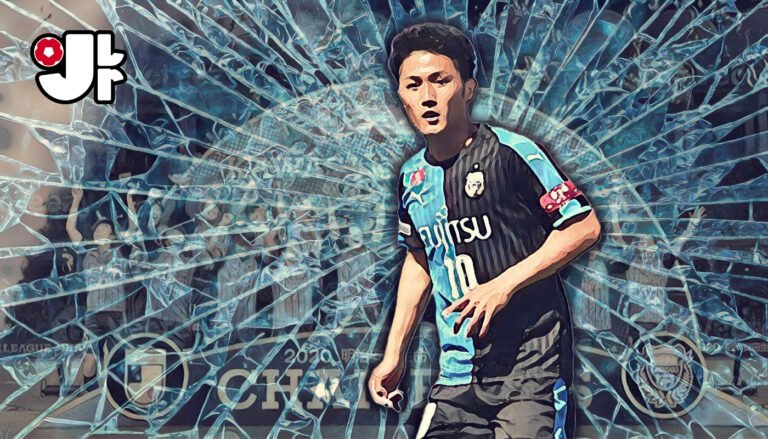
The Ricardo Lobo level – An Byong-jun (Roasso Kumamoto)
League goals-ratio in his career: 0,15 (65 games, 10 goals)
League goals-ratio in 2018: 0,32 (31 games, 10 goals)
Born in Tokyo, An Byong-jun has actually represented North Korea on the international stage, even playing for the U-17 side at the 2007 World Cup. After graduating from Chuo University, the striker joined the promised land of Kawasaki Frontale, which just started their first whole season under Yahiro Kazama. Injuries hindered his stint with Kawasaki, but finding space in a line-up which could field Okubo, Kobayashi and Renatinho was basically impossible.
So, An has looked for a loan move and he has found that several times. But it didn’t work neither with JEF United Chiba nor Zweigen Kanazawa, since injuries didn’t lose track of the kid and even in J2 the rivals for a centre-forward spot weren’t too easy to beat. But something changed last year, when An left Kawasaki and signed for Roasso Kumamoto. In Kyushu, the striker has found the space he needed to grow.
In 2017, An scored 7 goals in 33 games in J2; this year he’s already at 10 and the championship is long gone before finishing. Most of all, his goals helped Roasso avoiding even bigger troubles, gaining some points in the first part of the season. Can he keep up with this pace? In J2 (or even J3, if Roasso get relegated) and with this trust from the club, I think he can create himself a small career, since he’s also 28 years old.
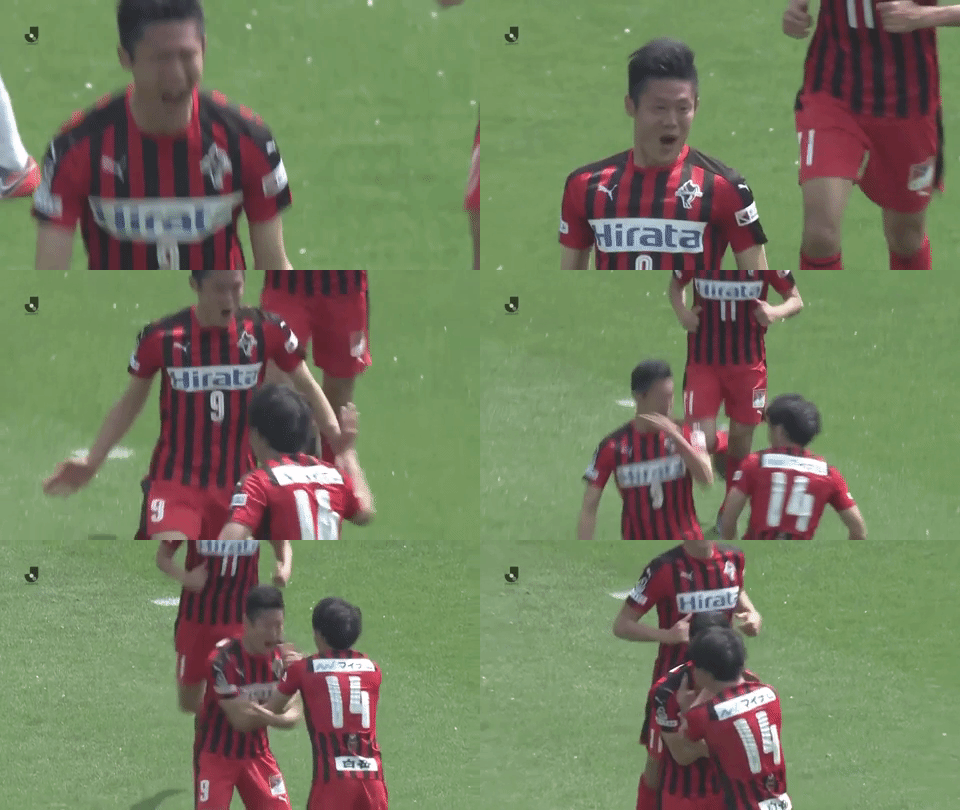
The Shohei Okada level – Daisuke Takagi
League goals-ratio in his career: 0,15 (99 games, 15 goals)
League goals-ratio in 2018: 0,20 (30 games, 6 goals)
It’s not a walk in the park if you’re pursuing a football career and not only you have two brothers who tried before you, but they’ve also achieved something. This is how it worked in the Takagi family: all raised by Tokyo Verdy’s youth ranks, Yoshiaki and Takayuki should have win the world. And they kinda did that.
Yoshiaki had an European experience with Utrecht: we thought he – alongside Ryo Miyaichi and Takashi Usami – would have been the next big thing in Japanese football, but he came back to Tokyo Verdy and now he’s in Niigata playing more J2 games with Albirex. It went better for Takayuki, since he first joined Shimizu S-Pulse and then now he has found new brightness after signing for Cerezo Osaka after basically not playing for Urawa Red Diamonds.
Daisuke remained five years at the Ajinomoto Stadium. Unfortunately, he never shone as much as his brothers: Verdy featured in the play-offs, but never went back to J1 and Daisuke has been fielded in many roles, not finding his groove under any manager. Therefore, he opted for a loan move to Renofa Yamaguchi, since Douglas Vieira, Alan Pinheiro and Ryohei Hayashi were all set to eat some of his pitch-time.
Surprisingly, playing under Shinoda worked a treat for him. Renofa Yamaguchi’s performances plunged since they sold Kosuke Onose this summer to Gamba Osaka, but their first part of the season was amazing. And Takagi was part of that: he scored five goals in the first 14 matches he played in the 2018 J2 League. Then he slowed down, but who knows: he could stay in Yamaguchi and find more time, or even go back to Tokyo and claim a spot at Verdy.
Just like Shohei Okada – who scored 14 goals with Shonan Bellmare in 2014 J2 League, while the other six league goals of his career came in six seasons –, there’s a risk Takagi might never repeat this good numbers if not put into the right system.
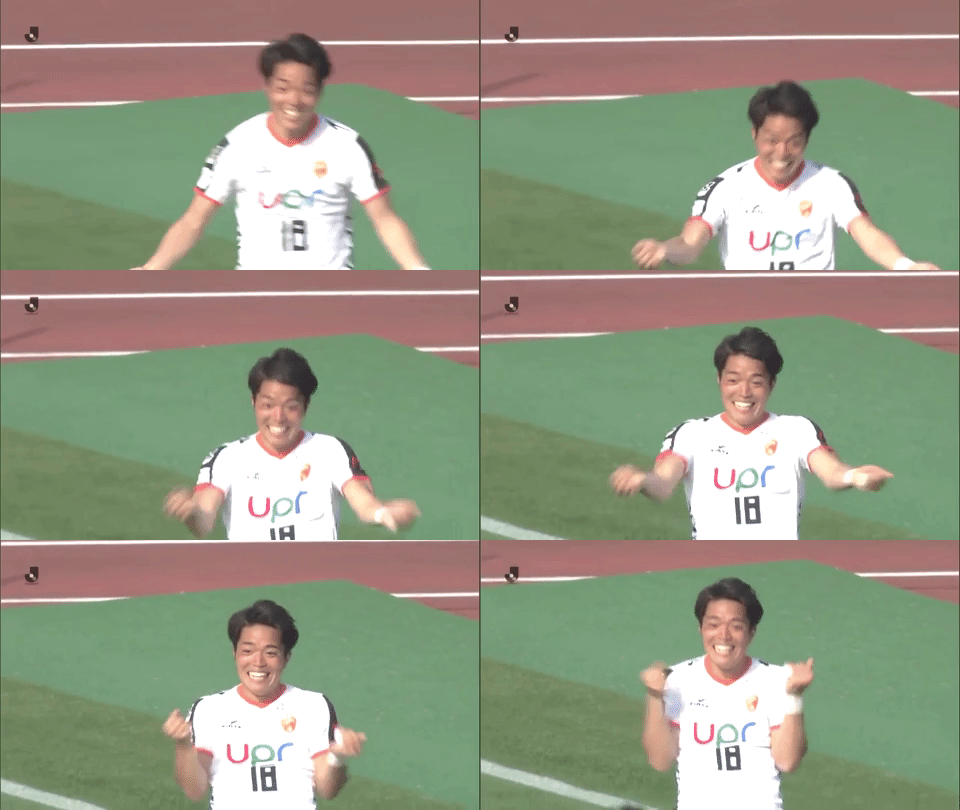
The Rui Komatsu level – Musashi Suzuki
League goals-ratio in his career: 0,08 (112 games, 9 goals)
League goals-ratio in 2018: 0,38 (24 games, 9 goals)
Here we have probably the biggest example of how expectations can actually hurt you. When Musashi Suzuki was just a student at Kiryu Daiichi High School – son of a Japanese mother and a Jamaican father –, many clubs turned up their attention to him after the 2011 U-17 World Cup, where Suzuki played four games. The winners of that race were Albirex Niigata, who kept the striker on their books for six seasons. Yet, the final result hasn’t been the best.
Albirex Niigata are a crumbling force in Japanese football: unlike in the 2000s, they have struggled in the last 6-7 years. Except probably 2013 season, they risked the relegation many times just to fall in J2 in 2017. And even their first 2nd tier-season since 2003 isn’t going that well, with even winds of relegation following them. In this scenario, Suzuki didn’t impress at all: he played 97 games in J1, scoring only six times. Not even the two loans to J2 clubs – Mito HollyHock in 2015, Matsumoto Yamaga in 2017 – helped that much, even if things went better in Ibaraki than in Nagano Prefecture.
When Suzuki recessed that bond with Niigata this winter, he joined V-Varen Nagasaki. The whole club has been a walking question mark from their promotion, because they’re small compared to other clubs and Nagasaki is a new environment for J1. On the pitch, predictions seem confirmed: despite good results and a solid fight, V-Varen look like a candidate for a J2 return. Yet, Suzuki has surprised everyone: in a relatively uncertain scenario, he has become the force of the attack alongside the Spanish no. 9, Juanma.
With nine goals in 24 games, he reached his whole contribution in six J1 seasons with Albirex. He scored clutch goals, like the one away at Shimizu for the first win-ever of V-Varen in J1. He might become a force to push V-Varen again back in J1 or even find a new team to stay in the top tier. In my eyes, though – reminding his bad performances between J. League pitches and Rio 2016 (remember? Yuya Kubo had to stay in Bern to play UCL football and Teguramori picked Suzuki to fill that spot…) –, he could be on his way for a Rui Komatsu-kind of career.
If you think about it, also Rui Komatsu was tipped to be a great star for Japan. After 35 J2 goals with Cerezo, though, he never repeated those times if we exclude a good season in Kitakyushu.
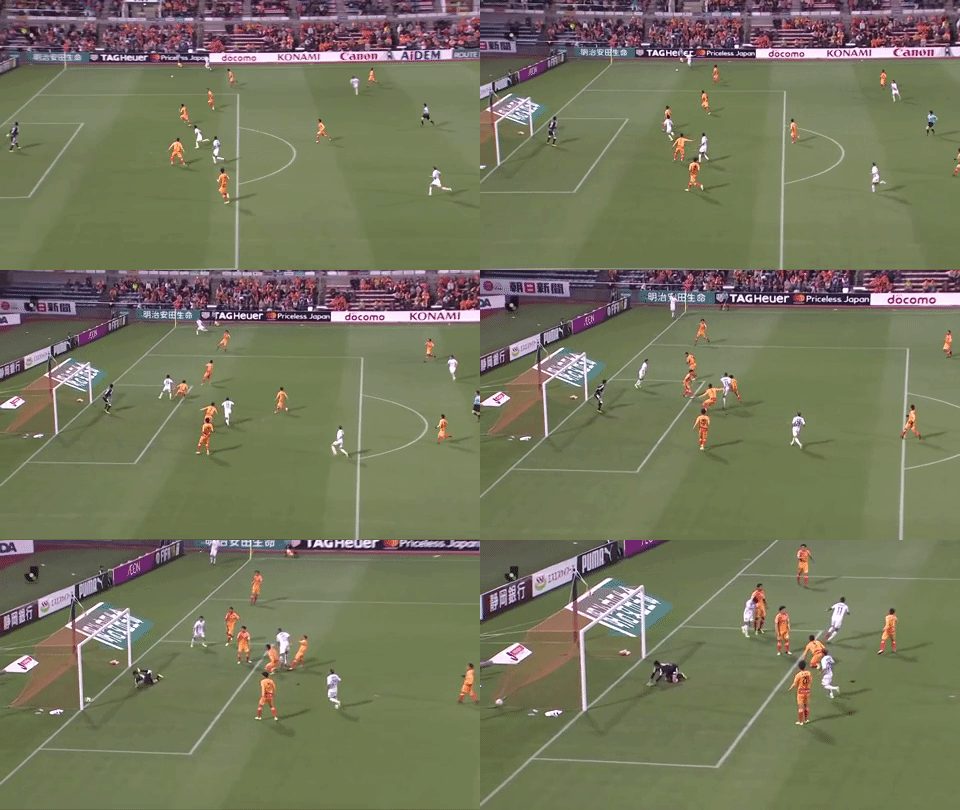
The Jin Hanato level – Yusuke Minagawa
League goals-ratio in his career: 0,10 (60 games, 6 goals)
League goals-ratio in 2018: 0,29 (34 games, 10 goals)
IMHO this example should be no. 1 on this chart, but I have to recognize there’s something even more incredible than this one. Anyway, Yusuke Minagawa has been relatively known to J. League followers, since he has been a part of Moriyasu’s wonderful tale in Hiroshima. The striker came into pro-football in 2014 and he has won the 2015 title with Sanfrecce, playing even a big role in the FIFA Club World Cup of the same year. And don’t forget one of the strangest thing I’ve ever witnessed, which was him and Tatsuya Sakai playing with Japan in the first match under Javier Aguirre (yes, it happened).
Minagawa was a back-up striker for Hisato Sato, a different card to use when Moriyasu couldn’t make it through his spectacular brand of football. His tall physique could give something else to the club, but when Patric signed on loan from Gamba Osaka, Minagawa saw his time on the pitch cut almost to nothing. With the acquisitions of Dangda and Kudo, there wasn’t any space for him.
Going on loan to a J2 club could have been a good solution and so Minagawa joined Roasso Kumamoto last Winter. In fact, it worked against all expectations: with An Byong-jun, the Sanfrecce-loanee forms a strange couple of forwards, which though has already scored 20+ goals for the club (50%). Not only that, though, because Minagawa surpassed the double digit and he scored more league goals in 2018 than in all his four seasons at Sanfrecce. Combined.
And if that’s normal on one side, because J2 football gives you more chance and Minagawa didn’t play as a starter in Hiroshima, it’s still fascinating, since the former no. 22 of Sanfrecce didn’t exactly shine even on those brief appearances under Moriyasu. Yet, this 2018 could have turned his profile into something useful: he could just go back at Sanfrecce and become a back-up for the main striker, just like Jin Hanato did for Yokohama F. Marinos after a good season at Giravanz Kitakyushu.
Or just remain at Roasso Kumamoto and enjoy his star status in Kyushu.
https://www.youtube.com/watch?v=6oquTa7EctY
The Yutaka Takahashi level – Ado Onaiwu
League goals-ratio in his career: 0,16 (63 games, 10 goals)
League goals-ratio in 2018: 0,58 (33 games, 19 goals)
Talking about Rio 2016 and the missed chance in Brazil, Ado Onaiwu could have been part of that squad, but he was just called as a back-up member after being part of the triumph in the AFC U-23 Championship of the same year. Teguramori probably couldn’t justify his call since his scoring rate hasn’t been the best in his young career, despite attention on his profile and a great trust by his first club, JEF United Chiba.
Half-Nigerian in his roots (the country of his father), Onaiwu is indeed born in Japan and he impressed in his younger days, when he attended Shochi Fukaya High School. JEF United Chiba – a crumbling force in Japanese football pyramid: they haven’t regained their spot in J1 since their relegation in 2009 – signed him and he gradually grew up in numbers, but not enough to retain his spot in the rotation. When Juan Esnaider came in Chiba and the forwards were Joaquin Larrivey, Takayuki Funayama and Hiroshi Ibusuki, it was clear there wasn’t any space for him.
Moreover, Urawa Red Diamonds put their eyes on him. Impressed by the potential of this young talent, the Saitama-based club acquired the striker, but they didn’t let him play that much: just seven matches and one goal in the Emperor’s Cup, despite Reds played 55 games in all competition during 2017 season. Therefore, despite lifting an AFC Champions League, Onaiwu knew how a loan could improve his situation.
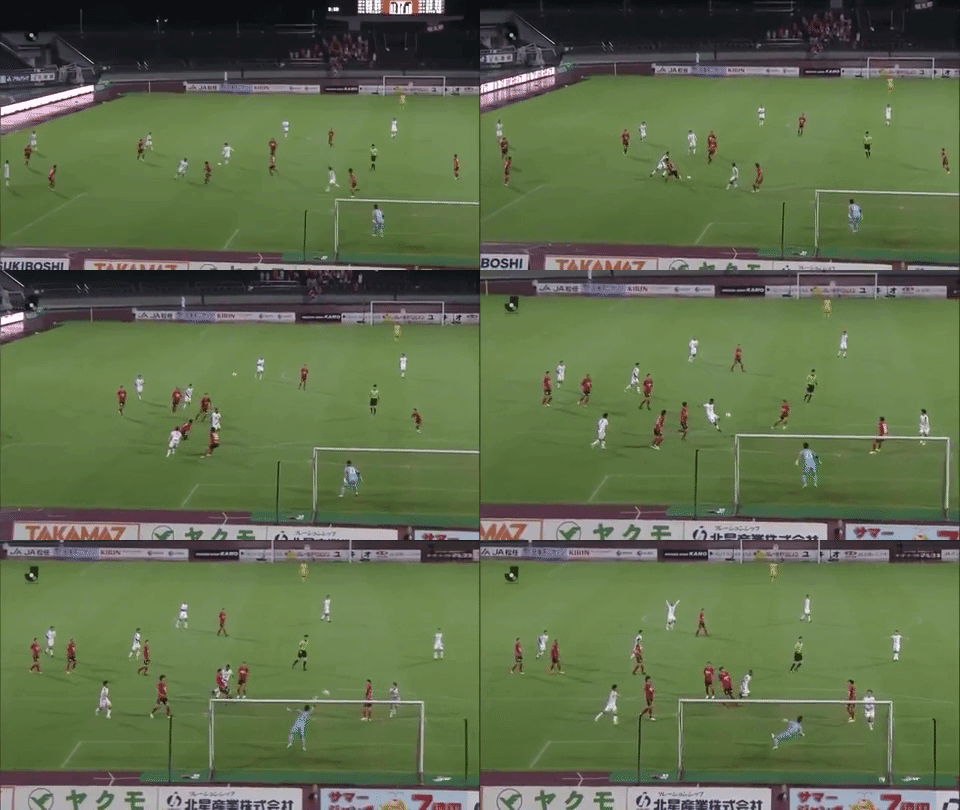
Fact is that the magic match with newly-appointed manager at Renofa – Masahiro Shimoda – worked immediately. Onaiwu has been chosen as the pivotal striker in the 4-3-3 formation that terrorized J2 League for the first part of 2018 season. Now Renofa have deeply dropped their performances, but the Urawa-loanee is still a revelation: one hat-trick against Omiya Ardija, three braces and four goals in the first three games played.
We don’t know if Onaiwu will find more space once he’s back at Urawa Red Diamonds, where Shinzo Koroki is a cemented key-player and he’s not easy to remove from his starting spot. Still, the Yutaka Takahashi comparison isn’t misplaced: he also lived a couple of great seasons at Roasso Kumamoto, only to miss the same goal scoring-rate in the other clubs he played for. Onaiwu must avoid that kind of ending.