October 26th 2019 – it’s a bright afternoon in Saitama. The J. League Cup final is going on and it will witness a first-time winner no matter what. Kawasaki Frontale are the clear favourite – given their back-to-back J1 titles in 2017 and 2018 -, but they face a tough battle. Yeah, Hokkaido Consadole Sapporo are playing their first final ever. And it’ll break their hearts, with a defeat coming just at penalties after a 3-3 draw in 120 minutes.
That’s when the Sapporo-train has touched the highest point. Sure, the 2018 lost second-place in the infamous second half of the last J1 match at home against Sanfrecce Hiroshima is another sliding doors moment, but lifting the J.League Cup would have opened incredible scenarios. Sapporo won some trophies before – for example, they lifted the J2 League trophy three times – but winning a national cup would have made a big difference.
From there, Sapporo has missed to develop further and then fell. For five years, the club floated between three 10th-place finishes (2019, 2021, 2022) and two 12th-place finishes (2020, 2023), before inevitably dropping back to J2 when talent couldn’t support anymore a system which saw always the same head coach, and players on the pitch, only with the problem of ageing.
Everyone could have told that 2025 would have been rough, but the first month of the season is leaving bigger scars than forecasted. Consadole have played six matches in the second tier – losing four of them, including the last defeat at home against Ventforet Kofu. And mid-week, Sapporo lost also in the J.League Cup, heavily and away – being knocked out by Fukushima United FC after extra-time (it ended 6-3 for FUFC). What’s next?
A New Life
When promoted in 2016, Sapporo had just five J1 seasons behind them. Four of them ended with an immediate relegation back to J2 – indeed, Sapporo was the first team ever to be relegated from J1 back in 1998. Nonetheless, when Consadole won J2 in 2016, they had a solid side, who had the better of promotion contenders like Shimizu S-Pulse and Matsumoto Yamaga.
2017 gave another optic, because the club was able to find its rhythm in J1, and ended up 11th on the table, comfortably away from relegation dangers. 2018 brought Sapporo to incredible heights – as mentioned, Sapporo almost qualified for the AFC Champions League, ending up fourth. And then 2019 confirmed that trajectory, with the J.League Cup final being the highlight of that season.
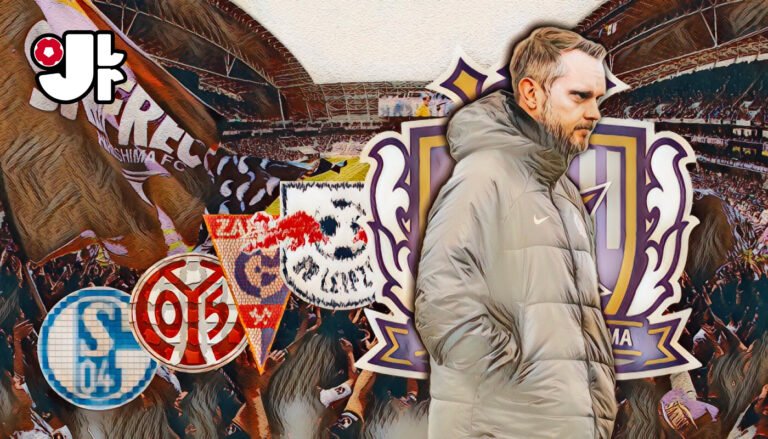
In all of this, Sapporo brought up a lot of local talent, all nurtured by the steady and expert hand of Mihailo Petrović (who was indeed the man who oversaw another renaissance, that time in Hiroshima in the late 2000s). Sapporo developed so many good players – even just looking at their own youth ranks (Daigo Nishi, Tatsuki Nara, Takuma Arano, Yuto Horigome, Hiroyuki Mae, Ryosuke Shindo, and Daiki Suga).
Last but not least, the squad was unpredictable. They were able to win games 8-0 – ask Shimizu S-Pulse what they think about Sapporo, they get PTSD about it -, and lose 7-0 (at Frontale, in 2018). They invested on South East Asian talent (their Chanathip Songkrasin bet paid off, massively), and produced players for European consumption (Musashi Suzuki, Tomoki Takamine).
2024: The Disaster
Jay Bothroyd might have said it already in many of his tweets, but the club sat on their talents. They didn’t push forward – take the Thai operation. Chanathip was a wonderful bargain, but Supachok Sarachat wasn’t pushed as much – despite being clearly talented for J1 & J2. Same happened with Kawin Thamsatchanan, a very solid keeper who would have been the talk of the town if properly tested between the posts.
Petrović made his time, and he was clearly out of his depth in the last two seasons – he’s a living legend of the J.League, but wasn’t sustainable (like other coaches somewhere else). Furthermore, the problem was (and is) in the roster. In Winter 2023-24, Sapporo lost Tsuyoshi Ogashiwa (to FC Tokyo), Lucas Fernandes and Shunta Tanaka (both to Cerezo Osaka), plus loaned left-footed wizard Akito Fukumori to a J2 side (Yokohama FC).
2024 was the embodiment of these mistakes, because the replacement were not really great. Still to this day, Sapporo are keeping in goal Takanori Sugeno, who’s been a great J.Leaguer, but he’s indeed 41 years old in a few weeks. Youngsters like Seiya Baba and Toya Nakamura struggled, while the real disaster happened up front – strange, especially for a chaotic team to watch like Consadole.
Jordi Sanchez, Kim Gun-hee, Amadou Bakayoko, and prodigal son Musashi Suzuki put together SEVEN goals in all 2024 J1 season. And usually it’s very hard to avoid relegation even when you have a decent striker putting together 10+ goals – let alone when four of them don’t reach a collective number of goals in double digits.
2025: The Descent?
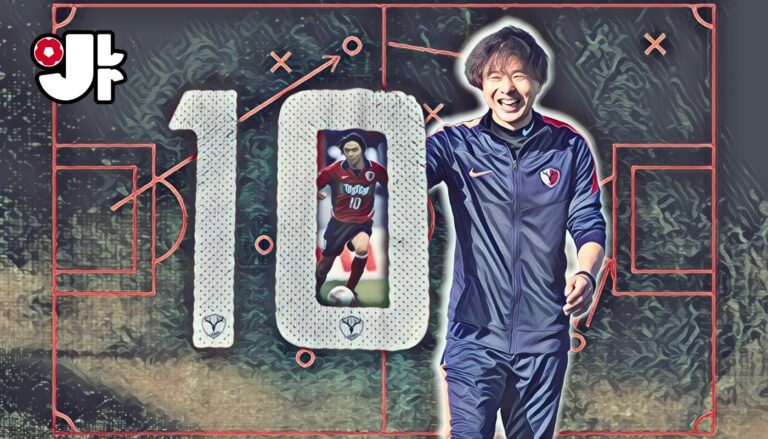
First mistake? Hiring Daiki Iwamasa as your head coach. His legacy as a national team player and his Antlers legend-status are clearly obscuring the judgement over his profile as a head coach. Surely, other options would have been available on the market to have a better transition from Petrović’s system and very long tenure. And then you have the problems around the roster.
The squad got weaker – Daiki Suga joined Sanfrecce Hiroshima, Yoshiaki Komai went to Yokohama FC, Yuya Asano joined Nagoya Grampus, and even Daihachi Okamura signed for Machida Zelvia. Two university kids, the return of Takamine, and the hope that Taika Nakashima will rise at a certain point of his career are not remotely enough to hope or even dream of an immediate bounce back to J1.
With Sapporo out of the J.League Cup and this start of the season in J2, what’s next? Well, we’d say avoid a catastrophe – the relegation to J3. It seems far-fetched to even think about it – since no side relegated to J1 got immediately the drop to J3. But Oita Trinita needed just two years to do that, and the J2 League from one decade ago is not the same of today. Less teams, more relegations, and more competitiveness even from smaller sides.
It’s also a legacy process. Hokkaido Consadole Sapporo made the North proud – beyond Kashima Antlers and Vegalta Sendai. The club gave us one of the best foreign players in the last decade, the current J.League president – it can’t finish like this (although the recent resignation of general manager Shinji Mikami doesn’t help). Sapporo are on the relegation watch-out list – they should take measures against even the slight risk.