November 20th, 2016 – CITY LIGHT Stadium of Okayama. Hosts Fagiano are hosting Thespakusatsu Gunma and, after leading 3-0, they’ve been caught on 3-3. They’re this close to throw away their first play-offs ticket to Machida Zelvia, but they’ll hold on the draw to qualify. Two weeks later, in Osaka, they’ll cry anyways for a 1-0 defeat in the play-offs final, losing against an uninspiring version of Cerezo Osaka.
It’s a strange one for Fagiano Okayama, who to our eyes have been mostly an “overachieving” club – they’re written off to be a J2 club, but in the last decade they took it up a notch, reaching the play-offs for three times, and developing several good players. They’ve slowly, but steadily become a “contender” for a shot at J1 – in the last 10 years, they missed the top-half of the table only three times.
They’ve been steady even in picking up managers – they had just five of those in 17 years (!). No manager lasted less than three years, from Satoshi Tezuka back in 2007 until the current one, Takashi Kiyama, who’s been already in his third year with Fagiano. A solid spot, for a club that gave the impression of being there in J2 forever. And instead, something magical happened last week.
Eight years after that disappointment, Fagiano Okayama celebrated their first J1 promotion after defeating 2-0 Vegalta Sendai in the J2 play-offs final. A deserved one, after destroying 3-0 Montedio Yamagata away in the semifinals. Next year it’ll be a tough challenge, but it was more than deserved. And we get now a 33rd team in the history of the J1 League – the first from Okayama.
Takashi’s Revenge
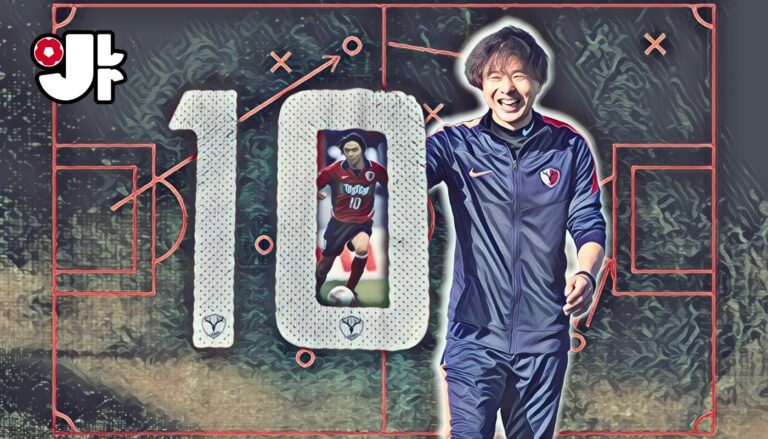
Yeah, the first piece of this promotion is Takashi Kiyama. He had an infamous record in the play-offs – he took part into those already four times with four different clubs (JEF United Chiba 2012, Ehime FC 2015, Montedio Yamagata 2019, and Fagiano Okayama 2022). He never won, and he was actually the head coach with the most matches in this strange appendix of the J2 League.
Furthermore, Kiyama had already coached in J1 – he took over Vegalta Sendai back in 2020. Luckily for Sendai, relegation were frozen out because of COVID – so the club was able to avoid the drop. But Sendai closed the season second-bottom, the worst club’s result of the last decade at that time. Kiyama had to start over from an assistant coach position, that he took at Gamba Osaka (for which he featured when he was still playing).
Fagiano Okayama were not just another club – they were a crucial test for Kiyama’s career: could he still do it in J2? After three years, we could definitely say yes. Fagiano reached their best position in history in 2022, closing third and then losing the play-offs semifinals against Montedio Yamagata. 2023 was a bit of a bummer – closing tenth -, but the potential was there and now he’s broken his curse.
And he needed this: Kiyama became this season the second manager all-time for games coached in the second tier (501 over 12 seasons). Only Takuya Takagi has more matches than him coached in the second tier. But all the managers in the Top 10 – minus Koichi Hashiritani and Makoto Kitano – have coached more in J1 than Kiyama. Time to turn the tides.
Wings of Change
Compared to other clubs that existed in previous versions, Fagiano Okayama officially started in 2004. And they had a quick rise, winning the Chugoku League and the Japanese Regional Series in ’07, followed up by the further promotion in ’08 – when Fagiano came fourth in the JFL, and reached J2 for the first time (alongside Tochigi SC and Kataller Toyama).
To think that, in a 30 years-plan laid out back in 2006, Fagiano proclaimed to want to reach J1 in 15 years, have a dedicated stadium in 20, and playing ACL in 25 years. The first phase took a bit longer, because their history in J2 was very long – Fagiano Okayama were the longest-serving club in J2 entering the 2024 season just after Mito HollyHock. Nonetheless, they gave their contribution to Japanese football.
The list of prospects developed by Fagiano is long and thorough: Hayato Nakama, Jun Ichimori, Satoki Uejo, Eiichi Kitayama, Shinya Yajima, Yuta Toyokawa, Kodai Sano. Even the foreign players picked for their rosters were iconic in the last years – Jordy Buijs, Lee Yong-jae, Paulinho, Mitchell Duke. Even this year – Svend Brodersen won “Best Goalkeeper” from our readers.
And alongside that good scouting for foreigners, there’s an intelligent internal market. Yasutaka Yanagi was a goal scoring-threat as a center-back with Tochigi SC. Takahiro Yanagi bounced around Japan and found a solid spot with Fagiano. Ibuki Fujita is a metronome who gained experience everywhere in J2. Hiroto Iwabuchi was a steal from Iwaki FC – and the only to score double digits of goals in this season.
First Flight
Promotion unexpected? So and so. V-Varen Nagasaki and Vegalta Sendai looked more as favourites at the starting line – but V-Varen lost momentum and Vegalta were terrible in the final act of the play-offs. Fagiano were just ready, winning both games – Okayama are the second team in the last decade (alongside Verdy in 2018) to have won the play-offs by winning both matches (and not relying on some draws to go by).
What should we expect from their debut? We take as a good benchmark another team that tried for a long time to get promoted, although they had a first taste of J1 in 2014: Tokushima Vortis. Once relegated back to J2, they build a certain team and tried 4-5 seasons to come up. A scenario like that could be in the making – and now it’s up to Okayama to prove they’re not gonna be there just for the ride.
Surely we’ll get a nice stadium atmosphere, and Okayama could have some nice ideas for their market: they’ve been good at scouting foreign players, and they’ve a sneaky eye as well for loans. We could mention Rui Sueyoshi and Jumpei Hayakawa from the 2024 season, but also other examples from the last years (Taishi Semba from Hiroshima, Shumpei Naruse from Nagoya, or Hideki Ishige from S-Pulse – twice!).
They were not supposed to be here, just like pheasants usually don’t fly. But the beauty of flying is to take off and look the panorama from the above sky. And it’s not easy to do that for a pheasant – but for now, it’s important they’ll enjoy this ride towards J1.