“The Athletic”, “Total Football Analysis”, and many more: Japan is on the map. It’s not just the performance at 2022 FIFA World Cup – where the Samurai Blue upset both Germany and Spain to win the group -, but it’s also around the professional attitude of players, the contained costs, and the easier accessibility to scouting tools towards the country.
This spurred a literal revolution in the last windows of the transfer market. On average, 10 players from the J.League are leaving the country to try the European leap, and also this last Winter transfer window surpassed the average of five. This Summer is proving to be the epitome of this approach – so many players have left the J.League, with clubs like Albirex Niigata or Shonan Bellmare even 3-4 members leaving for Europe.
Therefore, the question is not anymore why European clubs are picking Japanese clubs, but rather from where. And a few hubs consolidated themselves in the last years – and that’s what we’ve been investigating in these months, also looking at how the Summer is playing out. After Belgium and Netherlands, we’ll move up North to discuss another country who took a gamble on the J.League – way earlier than anyone else.
Scotland use to be an outlier before the 2022 FIFA World Cup, initiating the Japanese revolution at Celtic under Ange Postecoglou and even having other players in the league outside the Top 2. We’ve sat down with Stefan Bienkowski, Area Manager for Transfermarkt over the UK and COM editions, to understand how this trend is going and if there’s a coming back from what Celtic did to push the Japanese players populating their squad. Enjoy the read!
1. Let’s start from the beginning – Japan and Scotland seem very far away in terms of football approach. The two national teams met just three times, all for friendlies in Japan (the last one in 2009 – a 2-0 win for the Samurai Blue). Do you see any similarities in the way of interpreting football?
Hmm, that’s a good and difficult question. I’m no expert in Japanese football, so can’t speak for their league and culture, but I think both nations do appreciate good, technical football. The “passing game” was apparently invented by Scottish club Queen’s Park and I’m sure the way they played football over 100 years ago would have been very similar to how players in Japan try to play the game today. I think hard work is also prioritised by players of both nations, so there may be some similarities there.
2. There are just three Japanese players at the moment in the Scottish Premiership, but nonetheless, the rise is there – which factors have pushed that? Maybe there’s more than just the Celtic strategic push to Japan.
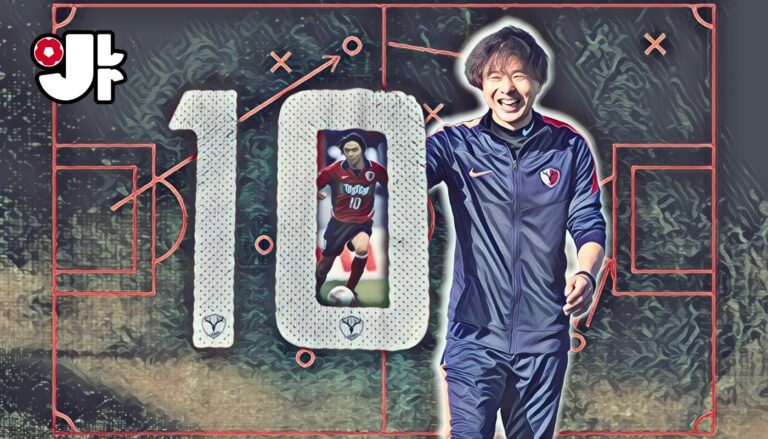
It’s hard to pin-point when Scottish football fell in love with Japan. Shunsuke Nakamura’s move to Celtic was definitely seen as a huge transfer at the time and his performances – particularly in the Champions League – are still very well regarded by fans of the club. A few Japanese players followed him to Scotland, but to very little success.
The real reason behind the current group of Japanese players in Scotland is largely down to Ange Postecoglou’s arrival at Celtic, who brought with him a wealth of knowledge about the J.League and other Asian leagues. Celtic used that to great effect and still do so to this day because the players are relatively cheap.
3. We mentioned the Celtic Japanese project, which brought, at a certain point, five Japanese players in the same roster. But in general, more have come in the last five years compared to the times when Shunsuke Nakamura or Koki Mizuno were in Scotland. Did something change in the quality of the Japanese players coming to the league?
I think there’s definitely a growing trend of players moving from Japan to Europe. It’s perhaps more common in Germany or the Netherlands, but I think the likes of Kyogo Furuhashi or Daizen Maeda have shown that if Japanese players can succeed at Celtic then they do very quickly get noticed by clubs in bigger leagues.
As such, Celtic can be a good stepping stone for Japanese players. Not to mention the fact that Glasgow as a city is very multicultural and enjoys cuisine from around the world, including multiple Asian ethnicities. So Japanese players can certainly settle in easier than other cities.
4. At the top of your head, best and worst deal for a Scottish club around a Japanese player. And if you look at the 2024-25 Japanese contingent in the championship, who’s the player that’s impressing you the most?
I still think Nakamura probably had the biggest impact when he moved to Celtic. He was considered a genuinely top player who was a master of his craft. So, he’s probably still the best Japanese player to move to Scotland. Koki Mizuno is perhaps the biggest disappointment, since he joined during the “craze” surrounding Nakamua and didn’t live up to any of the hype. Among the current crop of players, I would say Maeda is probably the most talented.
5. Last but not least, this could work the other way around. No Scottish players ever feature in the J.League – some of them went to Japan before professional football was there, others featured in J2 or even in the JFL. Do you see a couple of names that could do some good in the J.League from the Scottish football movement?
Scots have always travelled around the world, but the reason why football players rarely end up in the J.League is simply due to the draw of English and European football. I think it would probably take a player to move out there to study or even spend part of their childhood growing up in Japan to really have a chance of playing in the J.League.
This is the third episode of a column that we hope that will give the best to the curious followers around the J.League. We can only thank Stefan for his availability – you can follow him on so many platforms, like Instagram, LinkedIn, Bluesky and Substack, where he’s got as well a project over Bundesliga.
Episode 1 and 2 – over Belgium and the Netherlands – are still retrievable here. Transfermarkt is surely one hub to refer to, and we hope to have other protagonists of their team involved. Meanwhile, a new column is revving up, and you know how much we like them (check here all categories). See you soon!