It’s not always easy to talk about all the profiles you’d like to mention when it comes down to the J.League. You’d like to cover players who don’t always get the spotlight, but they would deserve a shoutout for what they did in these years. And that’s why J. Legends was born as a column – there are men who spent their career devoted to places or realities that don’t always get a proper narration, and today’s protagonist is a good example of that.
In 2018, when they got promoted to the J2, maybe we didn’t expect FC Ryukyu to last that long. They were a perennial J3 side, their promotion seemed very episodical and they lost immediately the man who made it happen, head coach Kim Jong-song. But if Kim never reached again those heights – mostly staying as a J3 manager between jobs (including a return at FCR between September 2023 and January 2025) –, the Okinawa-based side enjoyed four seasons in the second division.
It was a good success: in the first three years, Ryukyu didn’t risk at all the relegation. Actually, in 2021, they came ninth on the table – a major performance, before they crumbled back to J3, where they’re not living the best of lives, considering that Okinawa SV – the rivals in the region – could be one day on their way to J3. But what FC Ryukyu hold is a man, a captain, and their biggest symbol, who’s been there since the beginning of their professional lives.
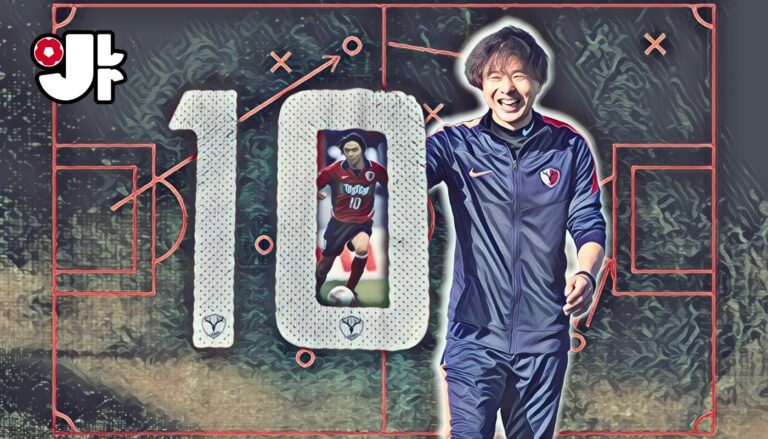
He’s not flashy, not particularly athletic – I’d say not the first player you’d lay your eyes on. But somehow Yu Tomidokoro built a career around being fundamental without anyone noticing. He’s still the no. 10 of FC Ryukyu and, at the age of 35, one of the symbols of both the club and the J3 League itself. And with FC Ryukyu struggling to get out of the mad, it feels right to celebrate the player who’s always been there for them.
Jumping through Japan
Born in the Saitama Prefecture in April 1990, Tomidokoro came through the youth ranks of Tokyo Verdy, with the hope of becoming a pro one day. The club was falling back to J2, and that’s where the young midfielder had his first taste on the pitch – he debuted in the 2009 season, at just 19 years old. Head coach Takuya Takagi gave him a run on the field, with Tomidokoro playing a few consecutive matches between April and May.
Then, Takagi had a change of heart, and the next two coaches – Takeo Matsuda and Ryoichi Kawakatsu – didn’t see him at all. In fact, if Tomidokoro played eight matches in 2009, he featured in none of them in the successive season. The midfielder remembers that time: “I joined the club in my first year after graduating in high school. I wasn’t a key-player, so I felt I could be a bit freer than my teammates”. But Verdy didn’t see a future for him in Tokyo, so they let him go.
Tomidokoro then joined Nagano Parceiro in the Japan Football League, back then the third tier of the Japanese football ladder. It was their first season in the JFL, and the 21-years-old joined to find more time on the pitch. He didn’t play himself any favours when he heavily criticized a performance from his team on his blog, which triggered a warning. Furthermore, Nagano would have seen Tomidokoro becoming a regista in the middle of the pitch, while the young midfielder believed in his no. 10 skills.
This pushed Tomidokoro immediately away from Nagano, joining FC Ryukyu in 2012. He had two decent seasons in the JFL, but the newly-born J3 League was waiting him and the club in 2014 – and that’s where his skills would have been more appreciated than in the muddy JFL. Little did FC Ryukyu fans know about the midfielder’s growth and how he would have enshrined his profile into the history of the club.
A rising no. 10
Tomidokoro didn’t immediately become a star in Okinawa. Sure, he was part of the team, but his growth was gradual. His second season in J3 (and the fourth with FC Ryukyu) was probably the first sign of a steady improvement: 36 games with three goals and three assists in 2015, followed by three goals and seven assists in 27 games of the 2016 season. And the turnaround arrived exactly in that 2016 season.
Yeah, because from 2016 Ryukyu have a new head coach, that Kim Jong-song we mentioned before. He implemented a very aggressive brand of football, with high tempo and pressing; that made the Okinawa-based side something to watch in the developing J3 League. Tomidokoro was encouraged by Kim in being more involved: “I was once obsessed by making the last pass, but the balance of the team went through me evolving into a goal scorer as well”. And 2018 gifted us the peak of that team.
It’s something we covered in an old piece of ours, but FC Ryukyu became an unstoppable force in that season – they didn’t win the league, they crushed the opposition like few others did in the history of the third tier. 70 goals scored in 32 games, +9 over the runners-up Kagoshima United FC, best attack of the tournament (by far). In all of this, FC Ryukyu had three players in double digits of goals, including Tomidokoro – who had already a wonderful 2017 (13 goals in 32 games).
Someone would have expected FC Ryukyu to collapse in J2, especially with the super-defensive Yasuhiro Higuchi taking over Kim. It didn’t happen – and Tomidokoro stayed a key-player in J2 as well. Sure, he wasn’t scoring anymore 10+ goals per season, but he was always there. If you exclude a tough injury at his biceps femoris muscle back in September 2020, the no. 10 of FC Ryukyu played in each season at least 25+ league matches since the club turned pro. A guarantee.
Morphing into a legend
Despite being the captain in J2, responsibilities didn’t change once FC Ryukyu got relegated. Yes, the club didn’t reach the heights of those four years in J2, and they changed already four managers in just three seasons back in J3, but Tomidokoro was more at ease with the pace of J3 League. For example – the no. 10 won MVP of the Month back in May 2024, in a season where he packed 12 goals in 34 league matches.
The form from this 2025 season – another disaster for the club – was indeed solid: seven goals and two assists in 31 games. With experience, he also featured in different positions, even playing as a “false nine” in some line-ups. Most of all, Tomidokoro is now almost top of the charts in the J3 League all-time caps and goals: 247 matches put him in the sixth place (not far away from YSCC legend Akio Yoshida); he’s also fifth for goals scored (50, done with just one club).
Tomidokoro has been so long in Okinawa that he’s now called “Mr. Ryukyu” – the club even produced some trading cards to celebrate his achievements. And to think that, when his former coach Hideo Matsuda pitched him the idea of joining FC Ryukyu back in 2012, Tomidokoro was a bit hesitant: “I had lived mostly in the Kanto region, and I was happy with that. Coming back to Tokyo from Okinawa isn’t the easiest ride, but I went for it and I’m still here”.
Tomidokoro has been there for the growth of the club: “When I joined in the JFL, I remember some players had part-time jobs while playing. I grew up along the club – I experienced a tough change here, but at the same time we’ve grown together. We’ve helped each other out”. And despite being 35 years old and towards the end of his career, surely Tomidokoro will give his best until the last kick has been given in his career.