In the same gap of time where the average-attendance peaked (20,751 people), the English account Twitter account started to work properly and the pitch has granted still surprises and emotions all over the three pro-divisions, J. League has still a final step to take. And it became clearer than ever last year, where among all three tiers we’ve seen too many mistakes: we’re talking of officiating.
Despite Japanese referees won twice the “AFC Referee of the Year” award – with Toru Kamikawa in 2002 and Yuichi Nishimura in 2012 (although Nishimura hasn’t been listed for FIFA matches since 2014) –, the officials seem to have a lot to improve. In 2019, we’ve witnessed the start of the “J. League Judge Replay”, organized in co-op with DAZN and featuring legends such Hiromi Hara and even current players like Keisuke Tsuboi (who then retired last year) and Tomoya Ugajin.
In this Italian-esque way of analyzing the calls made during matches (way calmer than the actual Italian versions, I guarantee), you could clearly see anyway a step ahead. At least, the league isn’t hiding anymore about their flaws; but still, you need more tools to arrange new solutions and avoid these mistakes that blatantly hinder the potential of the championship on the market.
Because yes, you can improve your football structure, feature in six consecutive World Cups, win four Asian Cups and be THE powerhouse in Asia, but if your league allows certain fallouts in terms of officiating, it’ll be hard to sell that product on the market. Lastly, international coverage could be hit by such mistakes: so, where J. League can go to actually develop solutions on this matter?
Where to start
After the 2019 season, it seemed clear to everyone involved that J. League needed an improvement of their officiating conditions. Despite the fact that the Japanese refereeing class is way ahead of other countries – I’d invite you to take a look in the West Zone or to CAF, for example – and that Japan is one of the most evolved nations on the face of planet Earth, tech-revolution didn’t get into J. League so soon.
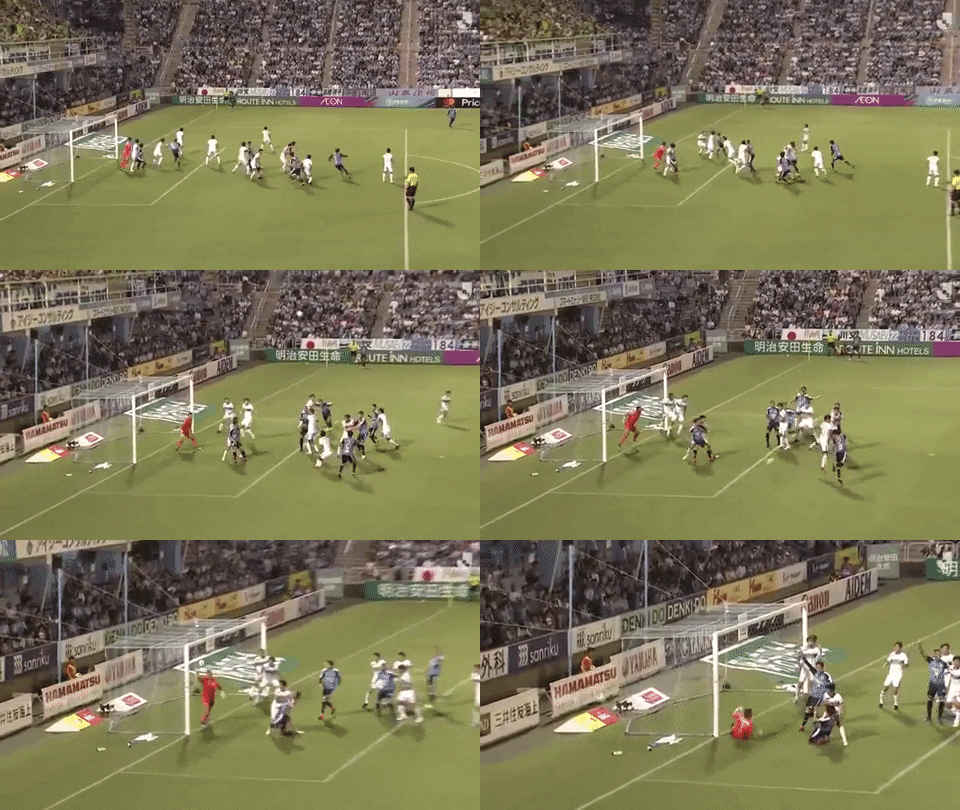
No goal-line technology, no VAR, no help of any kind. And 2019 proved there’s indeed a need for this kind of tools. The peak of this madness was probably reached on May 17th: during the game between Urawa Red Diamonds and Shonan Bellmare, guests are trailing 2-0, but a low shot by Daiki Sugioka brought Shonan back into contention. The ball fills the net, you can clearly see it.
Not for the referee, Mr. Yudai Yamamoto, who sees Nishikawa catching the ball and putting back into play, without stopping the players. You can see the amazement on Sugioka’s face, the rage by Cho Kwi-jea and you know what? Urawa almost scored the 3-0 on the sudden counterattack. Instead, they won’t and Shonan will be able to come back on the second half, winning it all for 3-2 in the injury time.
And it’s not like things improved during the remainder of the season, although a peak like this isn’t reachable again. From Nakagawa scored with a hand-ball off-side against Urawa to the doubtful goal not allowed for Iwata against FC Tokyo, passing through the “Mano de Dios” reenactment by Hiroki Yamada in the game between Júbilo and Shonan (always Bellmare suffering these mistakes, yet they won also in that game).
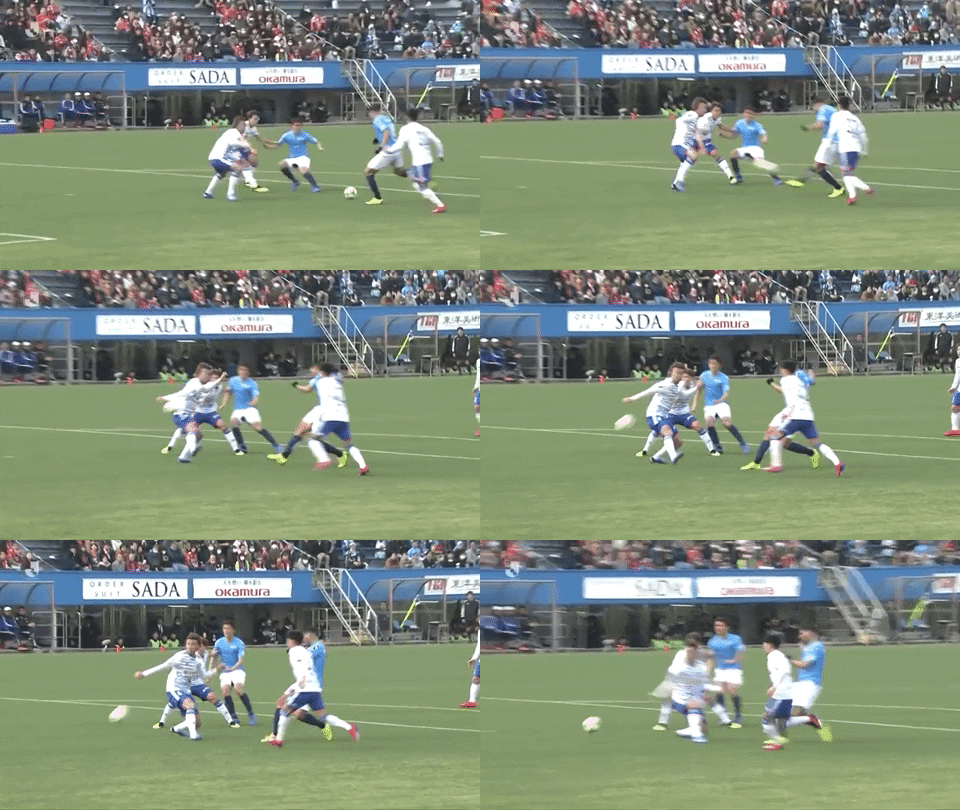
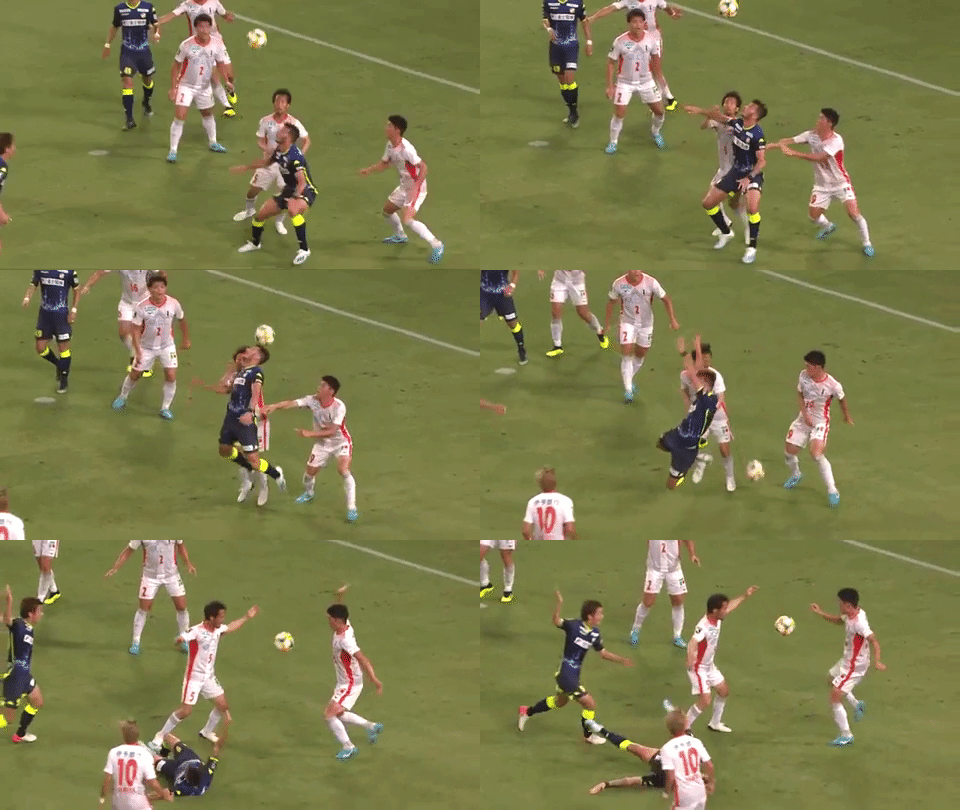
And it’s not like things improved in J2 and J3. In the second tier, not one, but two players were ejected just because they waited too much to put the ball back in play from the sideline (Kohei Tomita in Kyoto-Kagoshima and Koki Kiyotake in Montedio-Tokushima), multiple PKs were missing due to lack of calls for handballs in the penalty box (Ehime saw a PK denied for handball in the first leg against JEF, only to be punished in the second game of the season for a ridiculous push on Kleber).
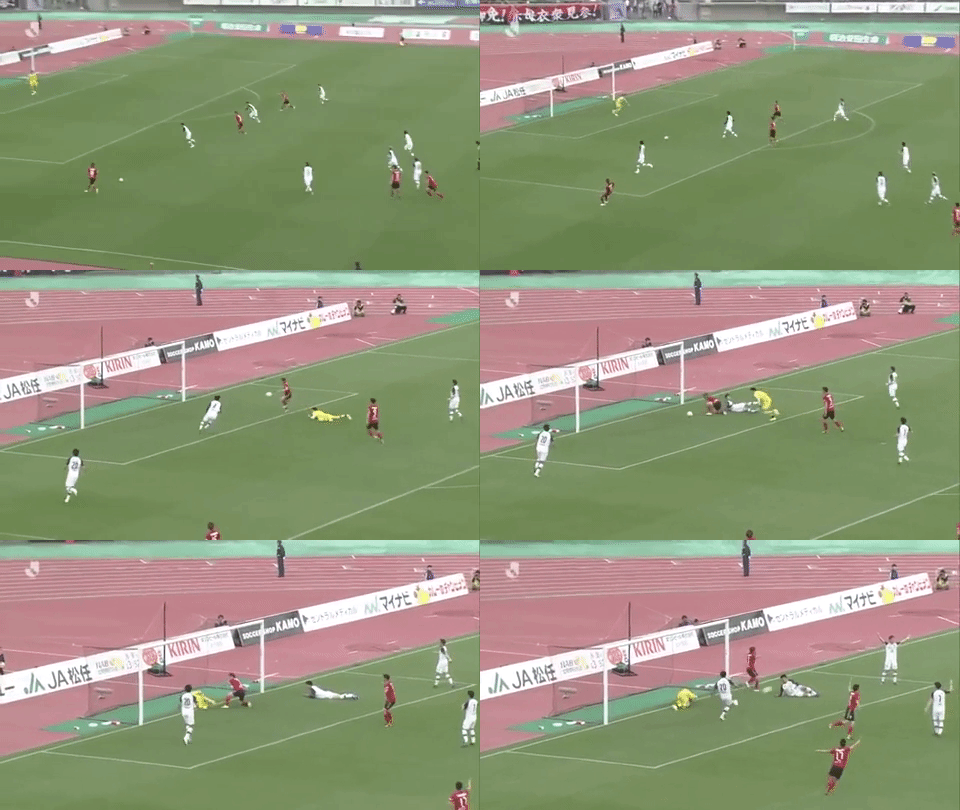
But that’s not all. In the second tier, the peak was reached in the game between Zweigen Kanazawa and Kashiwa Reysol. On the second half, ball in the center for Shohei Kiyohara, who chipped the ball over Kosuke Nakamura and then wins the clash against Koga. The ball is basically in; actually, it would have gone in, since Nakamura – in the rush of coming back on the ball – has pushed it in. But nothing, goal disallowed.
The game will end 0-0. It didn’t go differently in the third division: from strange calls in terms of PKs (look at the one granted for Blaublitz playing away in Gunma) to Hanai scoring with an elbow (!) against Gamba Osaka U-23. Also J. League Cup was subject to these mistaken calls, with Gamba Osaka missing a clear goal against FC Tokyo due a blunder from Hayashi.
But how can you improve such a situation?
Where to go
Logic would call for several courses to improve the preparations of the whole officiating class. We don’t like what usually happens in Chinese Super League – where foreign referees are called to manage games-on-demand, stopping the development of the local officials –, but certainly there’s the chance to make some improvements behind the scenes. Unfortunately, that won’t be enough.
After the disaster in Urawa-Shonan, many called for an immediate use of the VAR. The Video Assistant Referee has been debated since the start of its inception, but who’s writing is in huge favor of the tool. We think mistakes can happen, but the chances of a misinterpretation are highly reduced with clear rules and the right equipment. If you’re looking for a sport with no mistaken calls, football is clearly the wrong place.
But there’s surely some margin to do better and J. League should pursue that edge, because the value of this product could be hindered by these episodes. Even players have been vocal on their social network accounts – just look at Jay Bothroyd in his Twitter account or to Tsukasa Umesaki’s remarks after the Sugioka-accident – and there’s a real need for this matter to be adjusted.
A third move could (and should) be a judgement system, with points and ratings. After that Urawa-Shonan game, Yamamoto and the referee quartet were suspended for two weeks: it didn’t seem an appropriate way of punishing such a mistake. Of course, everyone should have a chance to redeem themselves, but two weeks after this kind of misjudgment seems light. The punishment (and reward) system has to work better than this.
What’s going on now
VAR is coming. No doubts about this: the league chairman, Mitsuru Mirai, was already clear on this last July, saying the implementation of VAR would have happened for 2021 season, but 2020 J1 League would have seen the start of this experiment. We’re sorry to hear that, though, because J2 and J3 proved to need this tool as well, so we don’t understand why there are double standards in place.
Like the good Dan Orlowitz reported on “The Japan Times”, last briefing are taking place in the last weeks, since the early introduction of VAR has to be set in the proper way. J. League also thought of having extra linesmen for phantom goals, but that would have been stupid to introduce, since technology will always work better than the human eye, especially if we’re talking about the goal-line technology.
The reports talk of “unlike in last year’s VAR usage by the J. League and JFA, video from the pitch side booth will be shown to fans inside the stadium”. And that’s another term of transparency needed by Japanese football, to have fans capable of making up their own ideas about what’s happening in real time. In the meeting, fewer calls were encouraged, following the model of Premier League (another solid idea).
2020 is looming and we’re expecting a great season to come. If this will be confirmed also because of a new and improved refereeing standard, that will be good.