One debutant team, three squads in the capital, and back to 20 teams after a first tryout in 2021 due to COVID: this is the 2024 J1 League, which has already started with the first match day. Although a bit delayed, we’re eager to preview a few moves that happened last Winter. To introduce this new season, “The Market Report” is back for 2024 and the names excluded are of certain relevance:
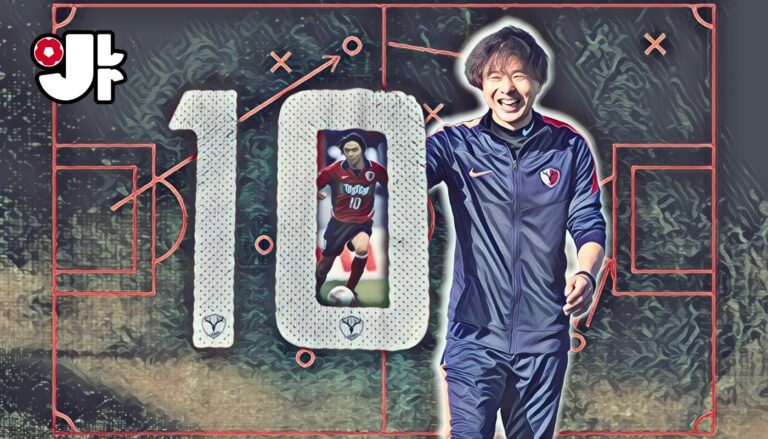
- First up, Hiroki Noda. He’s been very solid with Montedio Yamagata and now he joined Kashiwa Reysol to help them at the back.
- Speaking of center-backs, all eyes on Shinnosuke Nakatani, who left Nagoya Grampus after six years. Gamba Osaka is his next destination, and the blue-and-black side of Osaka needs a leader at the back.
- Nakatani hasn’t been the only to leave Grampus, because also captain Yuichi Maruyama has moved on, joining Kawasaki Frontale (who desperately needed some CBs). Eyes as well on Sota Miura and Erison (who started well in the ACL).
- Defending champions Vissel Kobe have radically changed their market philosophy, and Yuya Kawasaki is another proof. He joins from V-Varen Nagasaki, alongside other interesting and concrete signings (like Taisei Miyashiro and Yosuke Ideguchi).
- To close the recap of the exclusions, Shunta Tanaka: he left Hokkaido Consadole Sapporo for Cerezo Osaka, in an operation similar of what’s been seen with Ryosuke Shindo.
But let’s go through the Top 10 transfers we’ve found from this Winter.
10. Tomoya Miki | JEF United Chiba » Tokyo Verdy
He was already one of the most important players in J2, and we probably weren’t the only ones to think this: Tomoya Miki has finally taken the elevator to J1. After a few seasons with JEF United Chiba – who launched as well Haruya Ide and Yamato Machida -, Miki thought it was time to take the leap, and he chose newly-promoted Tokyo Verdy to give it a shot.
Verdy didn’t retain the loan of Hikaru Nakahara, who had a massive impact last Summer and now moved from Cerezo Osaka to Sagan Tosu. They needed another creative source and Miki will do the job, although the grade of his performances will probably determine if Verdy will be able to navigation relegation battles.
9. Yuto Suzuki | Júbilo Iwata » Shonan Bellmare
Silent, but creative operation – especially for a team with short resources like Bellmare. We’ve talked about Suzuki a couple of years ago, underlining his massive development – from average no. 10 to a wonderful wing-back, going through two powerhouses like Frontale and Gamba, but finding his sweet spot in Shizuoka. After two promotions and ? Years with Júbilo Iwata, it seems fair to move on.
Shonan have always counted on the wing-backs to keep them in J1 – ask Tomoya Okamoto and Kosuke Onose about their careers’ trajectory about that. Suzuki is another upgrade, being expert enough (a class ’93), a perfect fit for Bellmare, and becoming one of the senators at the club.
8. Yuki Ohashi | Shonan Bellmare » Sanfrecce Hiroshima
He started well – doing history from the start and scoring the first league goal ever at the Wing Peace Stadion in Hiroshima. But his brace against Urawa Red Diamonds in the opening game is probably the appetiser for something more. Yuki Ohashi came through like a surprise, exactly when Bellmare needed him – especially after Shuto Machino left for Germany, due to a wonderful period of form.
Hiroshima didn’t do too much on the Winter transfer market, but they didn’t need to. They just needed a few upgrades – and Ohashi for Ben Khalifa is one of those (if you keep Douglas Vieira, you don’t really need another kind of striker like him). Ohashi resembles a lot Mao Hosoya or Tsuyoshi Ogashiwa, excellent J.League strikers, who could have a shot at Europe and the national team, or become history in Japanese football.
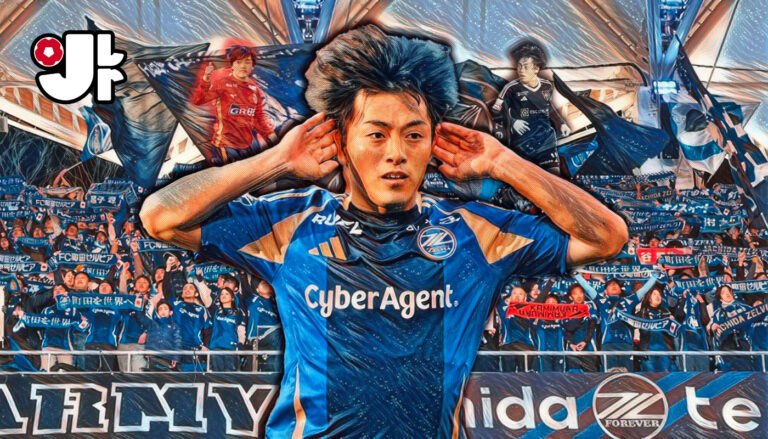
7. Kazuki Fujimoto | Oita Trinita » Machida Zelvia
Well, Machida have done more than just buying a good player. They filled up their squad with quality and experience for their maiden campaign in J1 – including Kotaro Hayashi from Yokohama FC, and turning into permanent moves the loans of Shunta Araki from Sagan Tosu and Shota Fujio from Cerezo Osaka. But if we have to look at one name standing out, Kazuki Fujimoto seems a good call.
The former Oita Trinita has silently developed – from being a second striker to becoming an interesting wing-back, which will give multiple options to Go Kuroda. Furthermore, Fujimoto is just 25, a son of the Kyushu-based football (born in Fukuoka, grown by Sagan Tosu, launched by Oita Trinita), and the six goals from 39 games in J2 last season are a solid starting point.
6. Tsuyoshi Ogashiwa | Hokkaido Consadole Sapporo » FC Tokyo
Speaking of interesting strikers, the operation accomplished by FC Tokyo has to be applauded. Tsuyoshi Ogashiwa has been steadily growing in his performances, despite a bad injury broke that line of development in 2022. Ogashiwa could be tried in the next EAFF tournament with Japan, and provides several options to Cklamovski on the pitch (winger, second striker, even no. 9).
What intrigues about Ogashiwa is not what he’s been in J1, but what he could become. He’s turning 26 this year, but his numbers – 17 goals in 78 games with Hokkaido Consadole Sapporo – hide his potential. A gritty, fighting, ductile – who reminds us a lot of Shinji Okazaki. FC Tokyo let go both Ryoma Watanabe and Adailton, while ending as well the loan of Perotti. With an aging Diego Oliveira, Ogashiwa will be fundamental from the start.
5. Rei Hirakawa | Roasso Kumamoto » Júbilo Iwata
We wouldn’t stay too much on him – we literally wrote an article last November to talk about him after the readers elected him “MIP” of the J2 League. His numbers with Roasso Kumamoto were staggering, and Júbilo Iwata desperately need a creative playmaker, because being just a physical and organised squad hasn’t worked the last time around in J1. A bit of excitement is needed another yo-yo between J1 and J2.
4. Yuya Yamagishi | Avispa Fukuoka » Nagoya Grampus
Well, Nagoya Grampus would have probably needed a different manager first of all – apparently the legend of Kenta Hasegawa isn’t here to stop. But they had a nice Winter transfer window – taking in expert Patric for goals, keeping Kasper Junker from Urawa Red Diamonds, and adding Ryosuke Yamanaka from Cerezo Osaka (now the best lefty in J1 after Fukumori leaving Sapporo).
Yamagishi has capitalised on a move to Nagoya from Fukuoka, where his stint with Avispa stunned many and surprised more and more with the passing of the season. His shadow-striker abilities will be missed and will be a plus for Grampus, especially after scoring double digits of goals TWICE. In J1, when he never did that in J2 (and with almost the best averages per game of his career).
3. Takahiro Ko | Albirex Niigata » FC Tokyo
We already mentioned how FC Tokyo did well last Winter – and the best signing came in the middle. It’s a position where the capital-bound club struggled with, since aging captain Masato Morishige and former golden boy Keigo Higashi haven’t offered anything there. Shuto Abe left last Summer, Takuya Aoki got older, and neither Koki Tsukagawa nor Riki Harakawa (although retained) were a good answer for that need.
Instead, Takahiro Ko absorbed the disappointment of being rejected by Gamba Osaka and rebuilt his career at Albirex Niigata. He became an anchor in the midfield, he was fundamental to come back into J1, and now FC Tokyo have filled that hole in the midfield with a 25 years old, with a decent amount of top-flight experience.
2. Motoki Hasegawa | Ventforet Kofu » Albirex Niigata
To be honest, we wrote about him back in 2022, and our positive judgement hasn’t changed… in all honestly, it became even more blatant. Hasegawa was already a fit for any J1 team – and his ACL performances proved that further. Furthermore, picking Albirex Niigata is even better – they played a fun, offensive brand of football, and they put a spot a decent amount of creative players (Shion Homma, Ryotaro Ito, Shunsuke Mito).
1. Thiago Santana | Shimizu S-Pulse » Urawa Red Diamonds
To be good in an environment always changing around you is not easy. That’s why it must be appreciated even more – and Urawa Red Diamonds are no exception. The Saitama-bound side did well last Winter, bringing in several interesting players – like Ryoma Watanabe, Samuel Gustafsson, or Rikito Inoue. But there’s one central to their future success.
Thiago Santana has been nothing but a guarantee in Japanese football. And he’s been that kind of player DESPITE remaining at Shimizu S-Pulse, a squad and a club melting in the last four years. 13 goals in 2021, 14 and top-scorer title in 2022, then the 12 goals in J2 last season. He’s been banging the drum in Japan since his arrival, and there’s no reason to think that it’ll be otherwise in Saitama.
Santana is already 31 years old, but the striker position has been a long-standing problem at Reds. A problem that seemed solved with Kasper Junker once Shinzo Koroki got older; then Junker left and no option among Linssen, Schalk, or Takahashi satisfied. Kante was the right fit, but he retired. It’s gonna be Santana or nothing, because if you wanna win a title, you need certainty within your squad.
That’s the last article of our pre-seasonal coverage for both J1 League and J.League in general for 2024!
If more articles will come in these days, you can always recover “The Market Report” for J2 League (here) and J3 League (here), which we published throughout February.
It’s gonna be a wonderful season – thanks for your support and sorry about the delayed last two articles. Enjoy this!