J2 League is always the fun side of the J. League. It’s the place where “Chaos and Energy” version of the league becomes reality. For the fifth year in a row, J. League Regista assigned its awards. To do that, we summed up a small panel to pick the possible options, then saw the votes coming through polls by our readers and followers:
With the change from 22 to 20 squads for 2024 and the tales of Ventforet Kofu in the AFC Champions League (plus Roasso Kumamoto reaching the semifinals of the Emperor’s Cup, losing only to Kashiwa Reysol), it’s clear that J2 League didn’t let down the usual neutral fans. Therefore, we can roll on with the winners!




Best Team | Machida Zelvia (72%)
Surely, there were a lot of expectations towards Machida. The steps in the squad, some interesting profiles, and the appointment of a new manager left some trust in them… for the playoffs run. Probably no one expected Machida to dominate this much and seal the J2 title with two games to go. Nevertheless, they’ll be playing J1 for the first time next season.
The whole team look balanced and went for it straight from the gate. Machida got us used to some great runs – seventh in 2016 (when they lost play-offs because of goal difference) as newly-promoted, fourth in 2018, fifth in 2021 (when no play-offs were played) – but they had also some disastrous seasons (18th in 2019, 19th in 2020). Finding the consistency to survive in J1 will be fundamental.
Flop Team | Omiya Ardija (45,8%)
It wasn’t out of the blue. The Squirrels had an amazing two years-stint between 2015 and 2016, but they were indeed a club in decline. In a Kanto area populated already by great teams and with a big neighbor (Urawa Red Diamonds), we often talked about how the club was struggling. Their last decent run came in 2019, when Masatada Ishii brought them to the play-offs semifinal, only to lose immediately to Montedio Yamagata.
From that point, Omiya hired other six managers. Takuya Takagi, Norio Sasaki, Masahiro Shimoda, Naoki Soma: we’d say every possible type of head coach, but nothing worked. Masato Harasaki was only the last one of the list, and after risking relegation by an inch already in the last three years, now Ardija will have to start again from third tier. Squad has been losing their talent, we don’t know if Jin Izumisawa and Atsushi Kurokawa will be enough to come back.
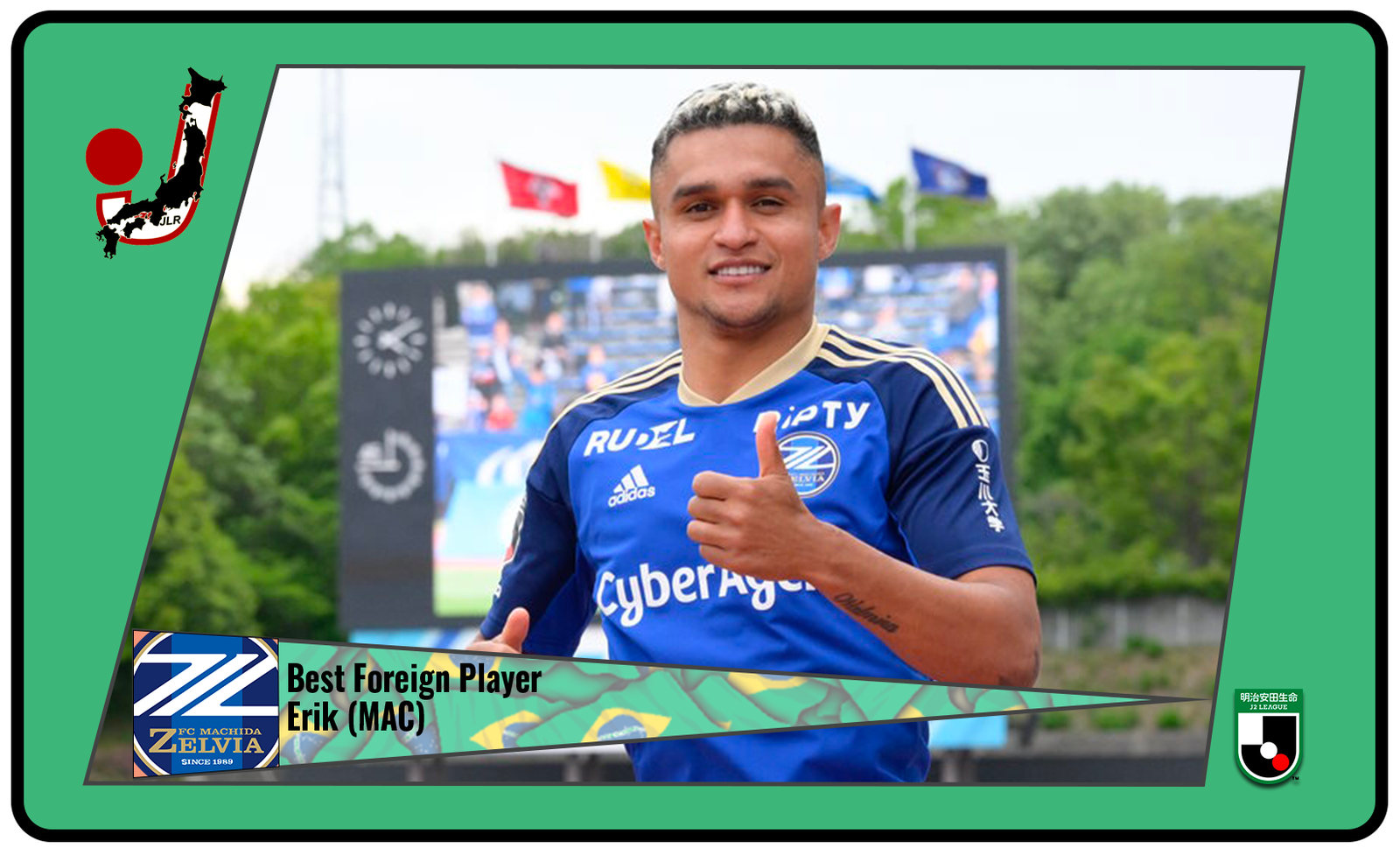
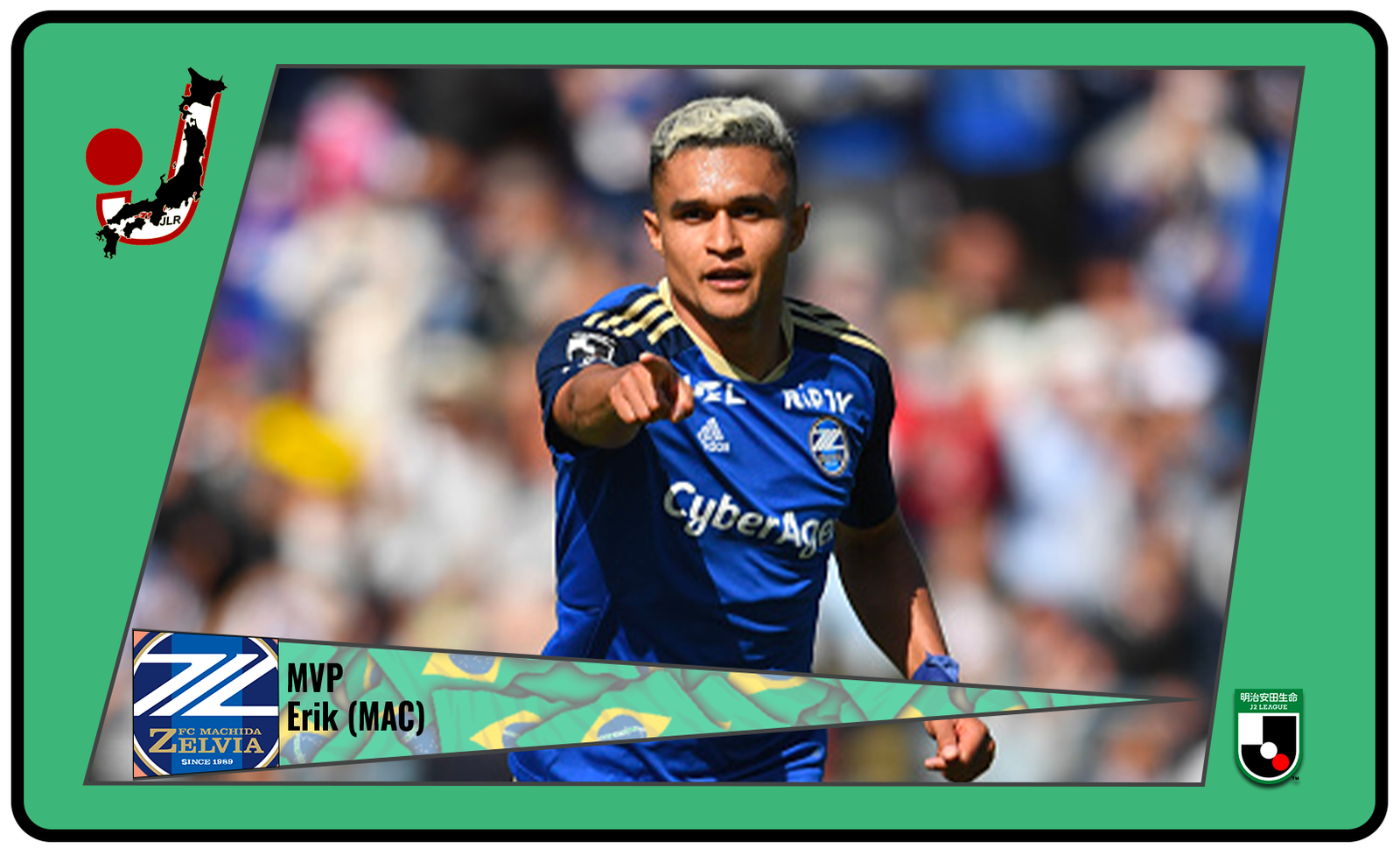
MVP & Best Foreign Player | Erik, Machida Zelvia (43,5% & 43,5%)
Exact percentage to win both awards, exact opponent defeated (Juanma Delgado, who indeed won the Golden Boot in J2 by a good margin). Machida had a whole team to count on – even bench-warmers did their job in certain key-games. But they wouldn’t be here without a key-acquisition: Erik. The Brazilian had already enjoyed success within Japanese football, winning the J1 title in 2019 with Yokohama F. Marinos.
Then an (un)explicable departure towards China, like most Brazilians tried from J.League to the Chinese Super League (ask Anderson Lopes and Leonardo how it planned out). Erik did score a good number of goals – 15 in 48 games with Changchun Yatai – but who knows how much he enjoyed life in the North-East of the country. So he decided to take a shot at J2 and return to J.League.
Machida have been a solid choice – Kanto-bound, good investment behind the club, and have the will to aim for J1 as soon as possible. 18 goals and six assists in 30 games confirmed the solid choice by both parties. Erik had a double-digits goals season, it’s not farfetched to think he could replicate his 2019 and 2020 form in Machida.
Best Goalkeeper | Matheus Vidotto, Tokyo Verdy (45,8%)
The one writing this recap is indeed one of the doubters of the Brazilian keeper, who though proved doubters wrong with a wonderful season. Sure, the Jofuku’s dark magic helped, but we were among the first head-scratchers around Matheus Vidotto. He didn’t completely convince us in his first two-three seasons within the posts of Tokyo Verdy, but surely he turned up his performances a notch for 2023.
Tokyo Verdy now enjoy the first promotion back to J1 in 15 years, with the Brazilian being one of the vice-captains within the team. 31 goals allowed in 42 games, with 23 clean sheets – those are really good numbers, who helped Verdy going back to J1. We’ll see if he’ll confirm himself next year in top flight.
MIP | Rei Hirakawa, Roasso Kumamoto (61,1%)
He was one of the names to watch, after taking over the armband at Roasso Kumamoto. We explained here why he deserved the MIP award this year.
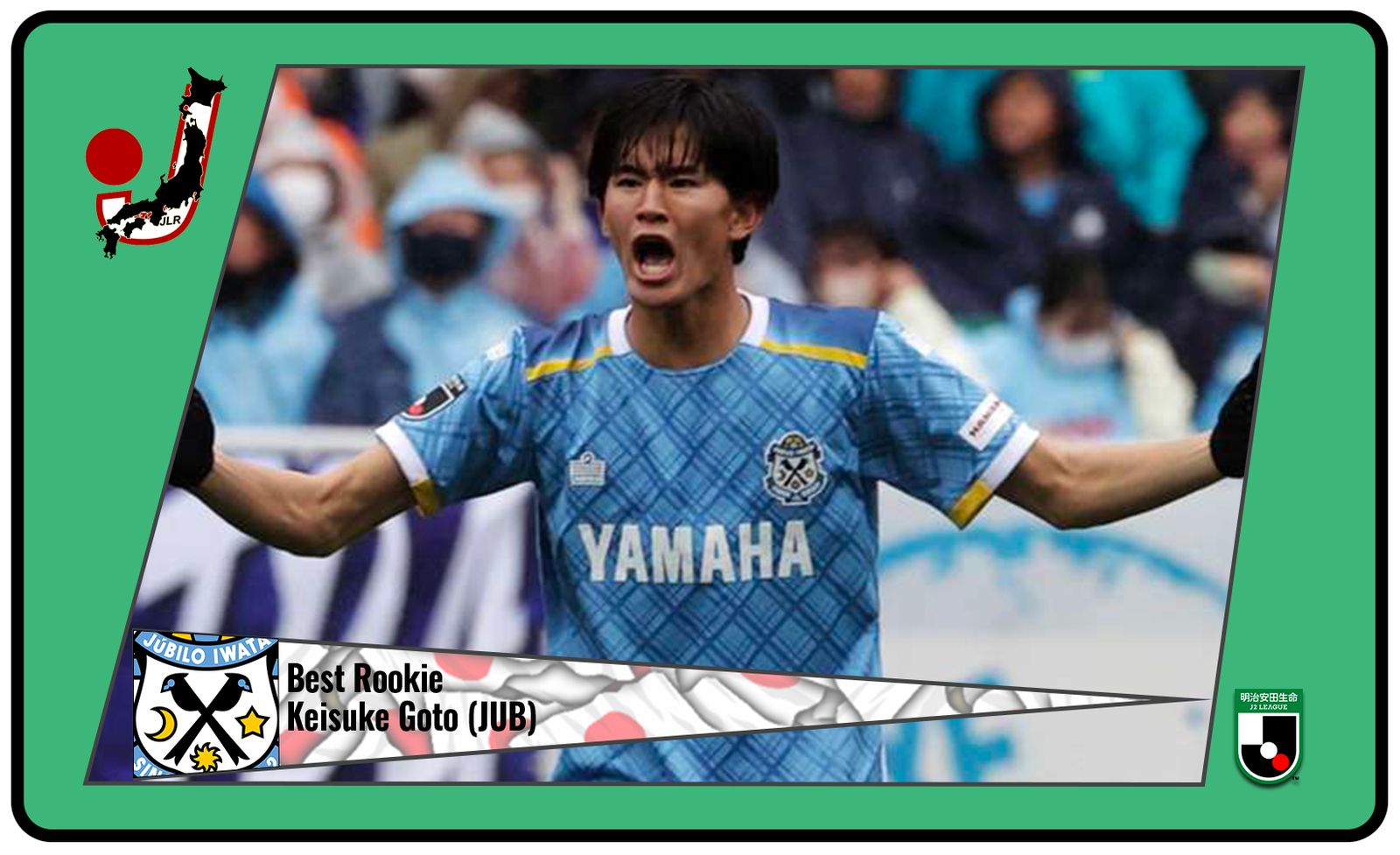
Best Rookie | Keisuke Goto, Júbilo Iwata (52,6%)
When Iwata saw their transfer windows restricted, many wondered if a too-old squad – just relegated – would have barely made it in the Top 10. In the end, Jubilo pulled it off before, but repeating this strategy could have been hard. Indeed, it worked, but a healthy dose of youth was needed this time around. And Kyosuke Goto represented the home-made saviour on whom the club relished.
Although JEF United Chiba’s Komori represented the shiniest example of how a young forward can impact a league, Goto is a class 2005 and he just signed for Anderlecht. He scored seven goals in 33 appearances, including two at his debut and one in the Shizuoka derby. The potential is clearly there and Anderlecht is a good choice; it’s up to him to convert that potential into a polished diamond in Europe.
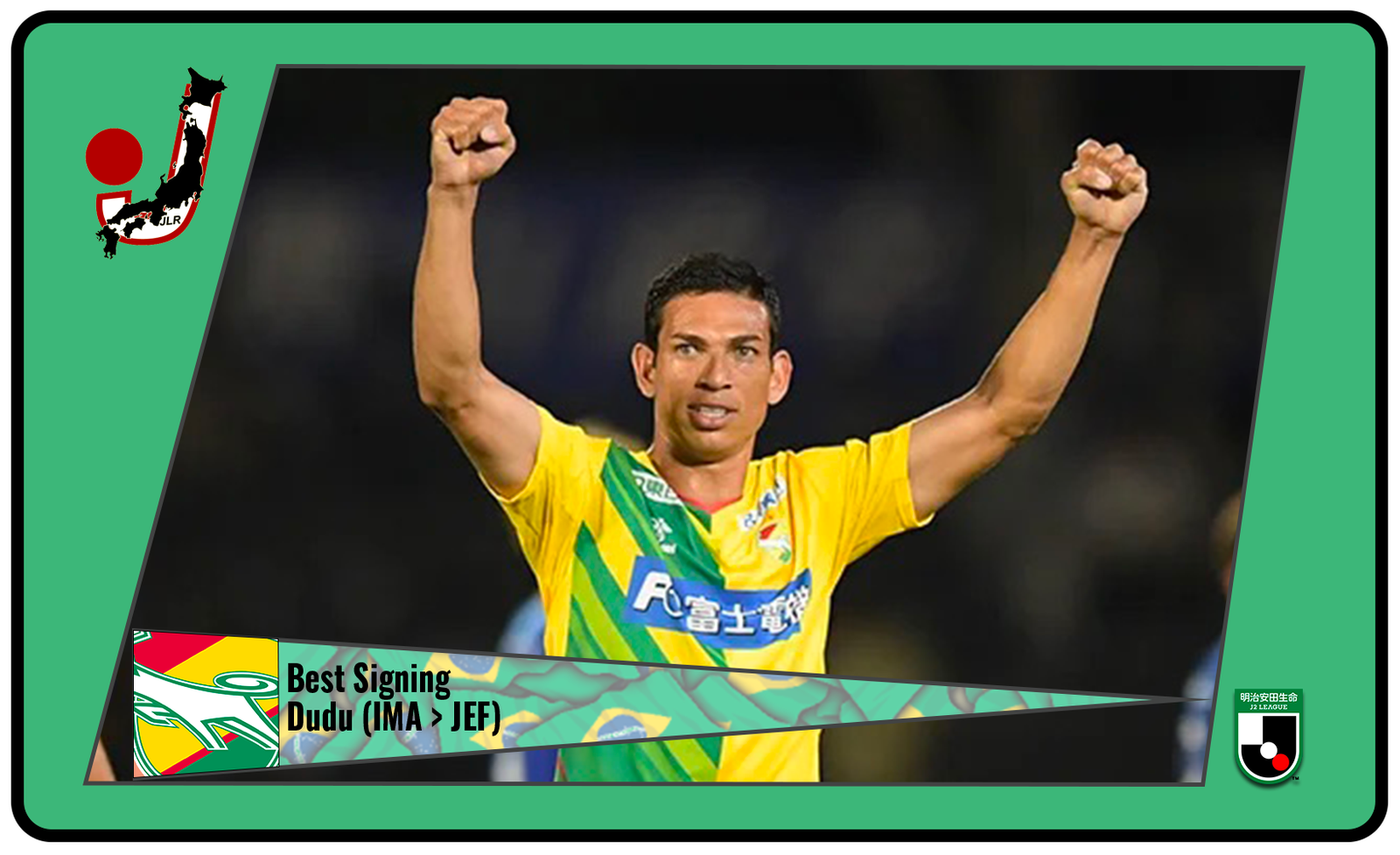
Best Signing | Dudu, FC Imabari » JEF United Chiba (40,9%)
More than surprising honestly… maybe the most-surprising category of all? Like others solid Brazilian footballers who have populated the J.League, Dudu fell down the ladder of Japanese football this year. He moved to J3 League at the beginning of the season, signing for FC Imabari, where he was having a solid year with the Ehime-bound squad. After playing for Kashiwa Reysol, he signed for the other side of Chiba.
But JEF United indeed took a good gamble on him – after scoring eight goals in 16 games of the J3 League, he kept almost the same score in the upper category (seven goals in 16 games with JEF), giving some creativity to a solid side, but probably didn’t have that much genius upfront. He’s gonna be 34 in April, but he can surely play a role in this J2 and maybe help Chiba have another shot at a J1 promotion.
Best Wish | Hikaru Nakahara, Cerezo Osaka » Tokyo Verdy (50%)
The fact that Verdy will play in J1 might not be relevant for his rebirth, but he clearly has the skills to be in that category. Here we explained how we came down to his restart in the green side of Tokyo.
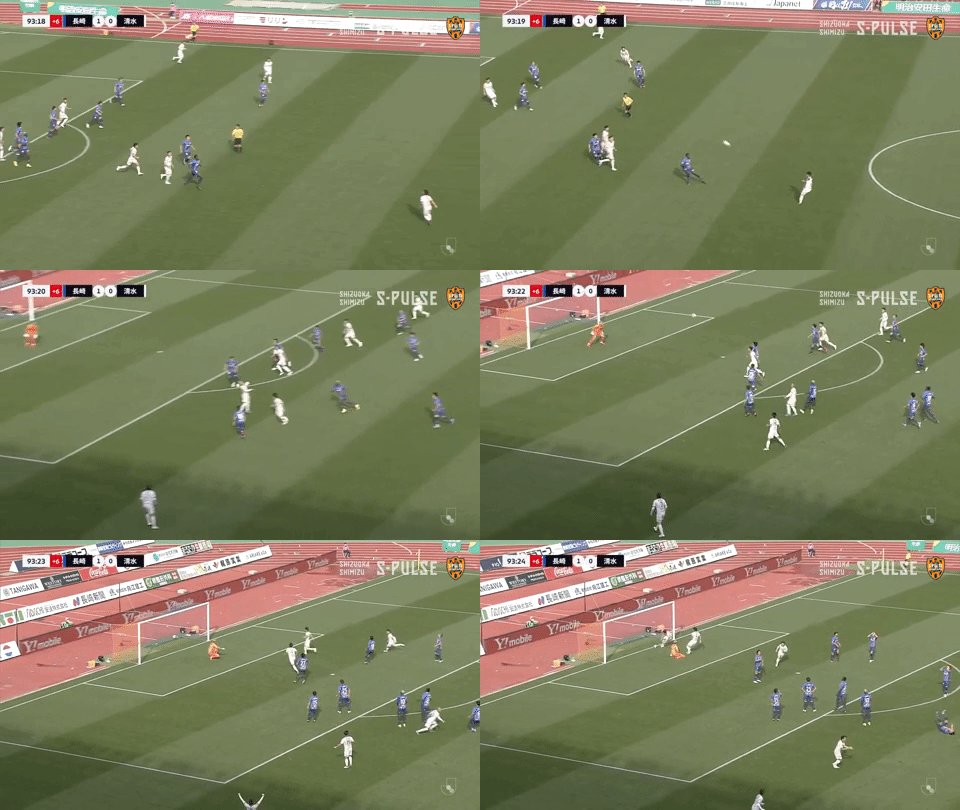
Best Goal | Akira Silvano Disaro, V-Varen Nagasaki v. Shimizu S-Pulse (MD3, 66,7%)
Can a goal frame a whole season, if not a career? Maybe it can. S-Pulse’s struggles went on of the whole season and then they costed them the promotion in the end. Disaro was part of those, showing some good performances, but not keeping the needed consistency to have a starting spot. And the problem might be in him wearing a S-Pulse jersey, because Disaro had very good stints with Kitakyushu and Yamagata in the same tier.
In the wait of understanding what he’ll do next – he was on loan at Shonan, where he scored a couple of goals, but nothing more – his goal against V-Varen in Nagasaki was worth both a point and the award. The incredible control, the immediate thought in looking for the goal and the great strike from his right foot – there’s everything about Disaro in that play.
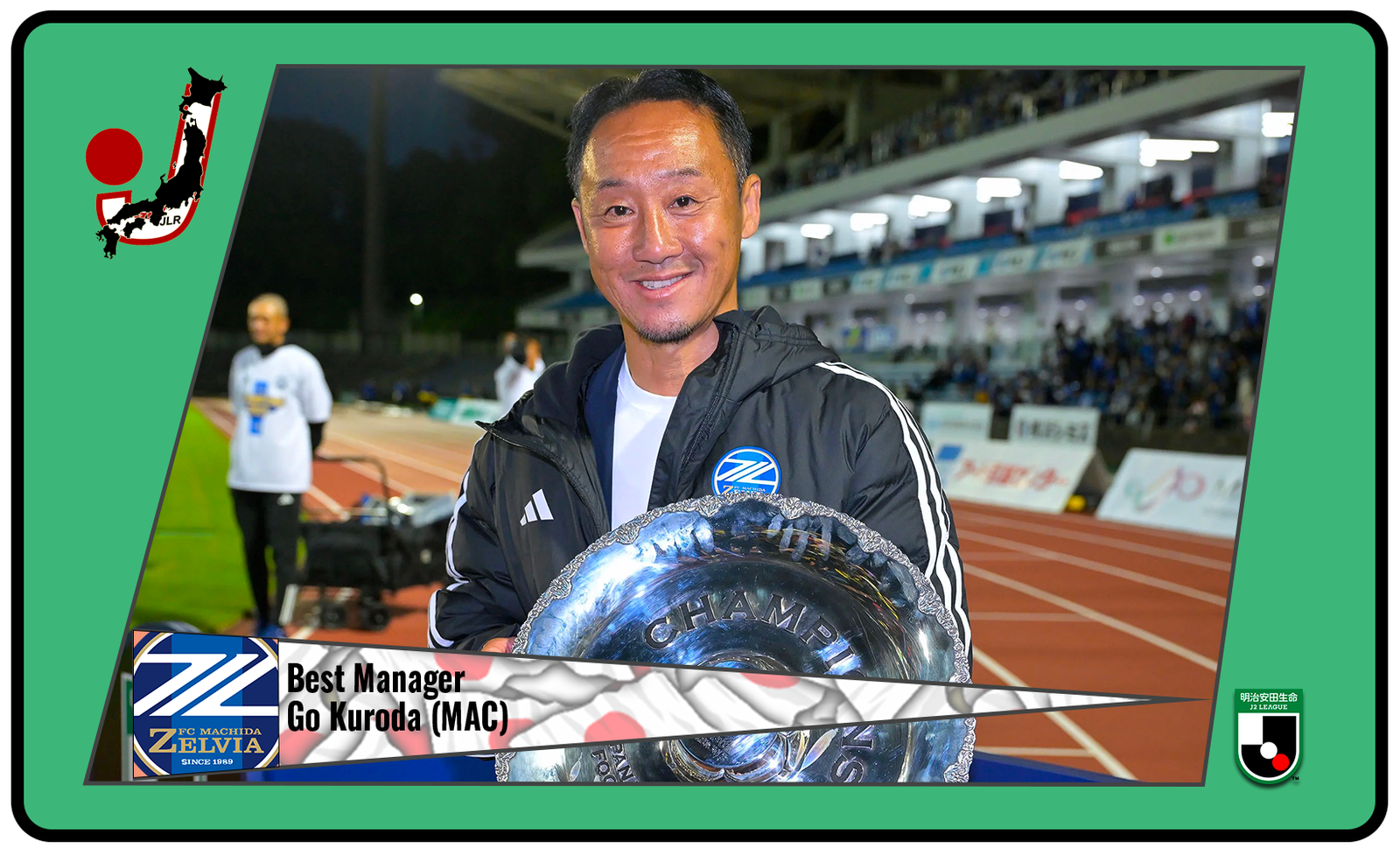
Best Manager | Go Kuroda, Machida Zelvia (66,7%)
Let’s not hide: the reason why Machida were one of the teams to follow last Winter was because Go Kuroda was on the bench. He was the high school-whisperer, with 29 years under his belt on the same bench. Kuroda was the alchemist behind the football program at Aomori Yamada High School – he became the head coach at just 25 years old. Under his watch, the program flourished.
Aomori Yamada High School made it to the National High School Soccer Championship from 1997 onwards – they didn’t miss a single edition and they won four times with him in the dugout. Kuroda would deserve a piece aside, but he launched incredible talents into the J.League-sphere – Gaku Shibasaki became a prince under him, plus Riku Danzaki, Kennedy Egbus Mikuni, Zento Uno and mostly Kuryu Matsuki found glory with him.
What he did in Machida was outstanding. He gave stability to a floating side, he relied on key-players to snatch several wins, and he benefitted as well of having a solid assistant coach like Kim Myung-hwi (who brought Sagan Tosu to great heights before being involved in a power-harassment scandal). The writings are on the wall to predict only great things for him and his squad.
It took us a bit to recover the pace, but the 2023 Regista Awards will help us with that. Thanks for your patience and the support you showed in these months of absence. Thanks to our panelist, and stay tuned on these channels: soon the Awards for J1 and J3 will be here…


[…] is going longer this season. If you want to catch up with the J2 League, you can read the awards here. Thanks for reading and following our activity throughout the whole […]
[…] featuring here, we can’t wait to see them again in action for 2024. You can recover J1 League and J2 League awards at the links reported. It’s been a blast to have another year of the Regista Awards: thank […]