It wasn’t that long ago that we wrote about an off-the-pitch topic in which Japan must improve. It was because of the change at the helm of the Japan Football Association, where a FIFA Master Alumni and a former captain of the JFA replaced an expert politician like Kozo Tashima. Replacing the long-serving Tashima was important, and Tsuneyasu Miyamoto seems the right choice.
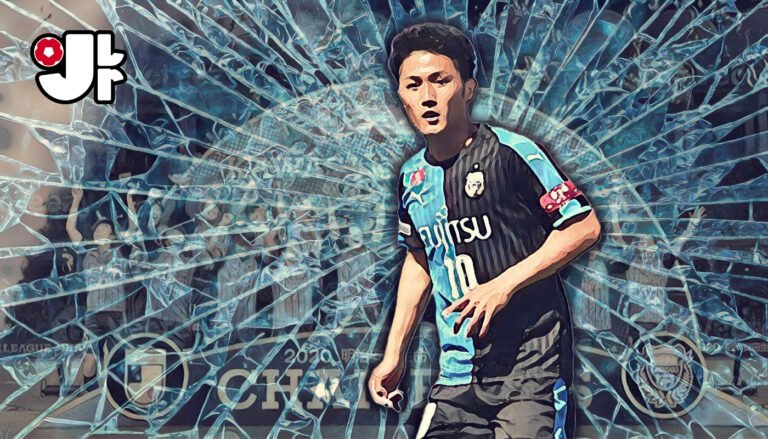
But that’s just a small part of the puzzle, which is visible from the bird’s eye view these days. The AFC Champions League Elite Finals – which took place in Jeddah in one week – saw Al-Ahli lift their first trophy ever, in front of an adoring crowd, after defeating Kawasaki Frontale in the final. Nothing wrong with that… except that the format and the venues are stuck.
Like it often happens, the Saudi Football Federation is using its economic leverage to get it done as they want to. Are we somehow dreaming? This isn’t different from what China and Qatar did throughout the whole 2010s, on both sides of the AFC. The constant? Unfortunately, Japan. Again, the greatest footballing movement in Asia isn’t capable of earning respect outside of the pitch.
The last 12 months showed two excellent examples of this, and we’re going to talk about them while pinpointing how dangerous this could be for the future. History tells us that this Saudi cycle will eventually end— maybe after the discussed bid for the 2034 FIFA World Cup. However, a certain “political laxity” by the Japanese football movement must be erased to change things.
The Administrative Disaster
The first drama actually happened a few weeks ago – in their first ACL Champions League Two run, a Japanese team was dominating the competition. It was Sanfrecce Hiroshima, who were trying to win the J.League, but they also kept running in the tournament. They had a clean progress by winning easily their group (16 points out of 18), despite fielding mostly senators and youngsters.
Rotating the squad was a tradition that continued in the knockout stages, where Hiroshima destroyed Nam Định on aggregate (7-0) and marched onto the quarter finals, where they were waiting for the Lion City Sailors from Singapore. A resounding 6-1 win in the first leg put Sanfrecce on their way to the semi-finals, but then a major asterisk came through. And that asterisk had the name of Valere Germain.
The French striker joined Hiroshima from the Australian side of Macarthur FC, who featured in the AFC Cup in 2023-24. Back then, before dissolving, Germain got sanctioned with a three-game ban. When the striker joined Sanfrecce, Hiroshima didn’t check, and Germain played in the first leg, even scoring one of the six goals. AFC slapped the punishment and the first leg was reversed to a 3-0 loss at home.
From there, the tie was done – Sanfrecce only drew 1-1 away and lost the opportunity of lifting the trophy, which would have been the first continental one for the Hiroshima side. Funnily enough, Lion City Sailors advanced and then got rid of Sydney FC to reach the final – which they will play against UAE side Sharjah FC. At home, in Singapore. And that’s where the other issue lies.
The AFC Joking Hour
We know how much the West side, despite lacking results on both club and national side for a decade, dictate the line. The money from UAE and Qatar first, plus Saudi Arabia now have forced AFC to endure some changes. The AFC Champions League calendar, the constant arranging of events on that side of the world, and the finals allocation. Which ironically have been the biggest problem.
Yes, because as we hinted already, the AFC Champions League Two and the AFC Challenge League will see their finals in the East. It was already determined how Singapore and Cambodia respectively will host these finals – with a good advantage not just for Lion City Sailors, but also for Svay Rieng, the Cambodian side who reached the final of the AFC Challenge League, and they will face the Turkmen side of Arkadag at home.
But the venue of those two competitions’ finals will be rotated in the next years. Not for the ACL Elite Finals – who got assigned to Saudi Arabia and with a particular format: West sides facing immediately East sides from the quarter finals, erasing the opportunity for the East to have a proper chance to have their representatives at the final act. And yes, Kawasaki Frontale made it, but they had to do a miracle in defeating both Al-Sadd and Al-Nassr.
And that’s troublesome, because that’s the usual suspects paradox: money can drive a conversation, but it can’t be the only requirement. Especially when Japan and South Korea have obtained way more than what the Western side achieved for the AFC worldwide. Yes, Qatar won back-to-back Asian Cups, but their players are not thriving away from home. And yes, Saudi Arabia has brought some exceptional players to the SPL, but their national teams have struggled.
It’s Not Even Begun
And that’s just the beginning. The 2031 FIFA Women’s World Cup saw Japan rejected in their candidacy, because Australia hosted the competition in 2023. And that’s a bummer, but it is still within FIFA rules (unless the president bends them for its personal benefit). But that’s not just limited to the major international competitions, rather also for the continental ones.
Take the 2031 AFC Asian Cup – it’s gonna be the first which might be held outside of West Asia after 2019 (UAE), 2023 (Qatar), and 2027 (Saudi Arabia already won the bid). And yet, the AFC is not rejecting right from the start the candidacies of Kuwait and UAE, despite having some worthy candidates (South Korea would be THE place to be, but also India, Indonesia and the Central Asia bid could be interesting).
It’s time for Japan to raise their voice. The first part is done – now former players, with a certain experience and preparation, are holding the most important offices (Yoshikazu Nonomura is the J.League chairman, and Tsuneyasu Miyamoto is the JFA president) With Makoto Hasebe in the technical staff of the national team, and Yuto Nagatomo closing to retirement – he’d be perfect for some roles -, this has been taken care of.
But outside, Japan is invisible. Despite having a national team and a football movement which are doing wonders in the last 5-6 years, they’re politically irrelevant. And that has to stop – otherwise, wherever they come from, money will always be the main requirement for everything in Asia. Japan is thriving on the pitch. It’s now time to do the same outside.
To provide the best experiences, we use technologies like cookies to store and/or access device information. Consenting to these technologies will allow us to process data such as browsing behavior or unique IDs on this site. Not consenting or withdrawing consent, may adversely affect certain features and functions.
Functional
Always active
The technical storage or access is strictly necessary for the legitimate purpose of enabling the use of a specific service explicitly requested by the subscriber or user, or for the sole purpose of carrying out the transmission of a communication over an electronic communications network.
Preferences
The technical storage or access is necessary for the legitimate purpose of storing preferences that are not requested by the subscriber or user.
Statistics
The technical storage or access that is used exclusively for statistical purposes.The technical storage or access that is used exclusively for anonymous statistical purposes. Without a subpoena, voluntary compliance on the part of your Internet Service Provider, or additional records from a third party, information stored or retrieved for this purpose alone cannot usually be used to identify you.
Marketing
The technical storage or access is required to create user profiles to send advertising, or to track the user on a website or across several websites for similar marketing purposes.