In the last two decades, Japan has clearly made some huge improvements in their football movement. Many players were able to take the leap to Europe or South America; the Japan national team featured in six consecutive World Cups after their debut campaign in 1998; some Japanese players left a mark all over the world, either because of their talent or thanks to their character (or both!).
Some of their stories started in small clubs, even by not playing in the top tier. Most of the Japanese players who have moved to Europe are in the offensive department: it’s not a mystery that Japan is able to produce a lot of interesting profiles in roles like offensive midfielders, wingers and full-backs. Goalkeepers and strikers are not abundant, but Japan is pretty much covered in those positions.
Especially the “10” role – whether you mean it like a technical winger or a crafty no. 10, maybe behind the main striker – saw a ton of promises rising through the Japanese football pyramid. And it doesn’t matter if you’re not playing in J1 League. Remember Shinji Kagawa? He featured in just 11 games in the first tier before moving to Borussia Dortmund and changing the course of his career, forever.
That’s why we’re here: this new column is called “Po10tial” because this year’s J2 League has offered five solid profiles, with several traits in common. They’re young (every single player could be an option for Tokyo 2021), they’re mostly midfielders (sorry, no Kazuma Yamaguchi here, although he’s a really interesting player) and they all wear the magical number 10, bringing fantasy and delight to their fans.
The protagonist of the second episode of this column might be the most debatable choice here, but we guess there’s a huge potential to witness in this player. He’s one of the home-grown products of Omiya Ardija, born and raised in Saitama. He had to go away on loan to develop, but his two years-loan to Mito HollyHock has only pumped the expectations, in the hope they won’t be let down.
We are talking about Atsushi Kurokawa, the no. 10 for the Squirrels.
Prophet abroad
Class ’98, Kurokawa was meant to wear a Omiya jersey. He was associated to the youth ranks of the club, coming to the first team in a crucial time. Just when the club conquered back their way to J1, a lot of youngsters were promoted. Four players took the leap (a number never seen at the club back then): among them, Kurokawa is surely the one who enjoy the best results in his career.
Alongside him, there were other players. All-rounder Kento Kawata is at his fourth loan, this time to Parceiro in J3 League, while forward Takumu Fujinuma has enjoyed good stints in J3 with Grulla and Blaublitz, but he’s not finding any space in J2. Goalkeeper Yuji Kato is instead in the roster, but he’s third in the starting order and he hasn’t played once this season.
A different path came to life for Kurokawa, who was struggling to find some space on the pitch. It was normal, since Ardija enjoyed a wonderful 2016, coming tantalizingly close to an ACL-spot and living the best season of their history (fifth, trailing just two points to Gamba Osaka). Omiya had many options in the offensive department, leaving little chances to the young midfielder.
He had a bigger spot in 2017, but he racked up just 11 games and two goals. He probably understood he could have more minutes in J2, but not with Omiya. The club hired Masatada Ishii – who was freshly-dismissed by Antlers after bringing close to the FIFA Club World Cup triumph against Real Madrid – and looked to immediately gain back their J1-status. Instead, Kurokawa needed something else.
So the young midfielder went on loan to Mito HollyHock, where there was plenty of space for him. A classic side of the second division – actually, they’re the club with longest streak of participations to J2 –, HollyHock represented a safe environment where Kurokawa could craft his skills: no pressure, no promotion to reach, avoiding relegation was the minimum goal for those years.
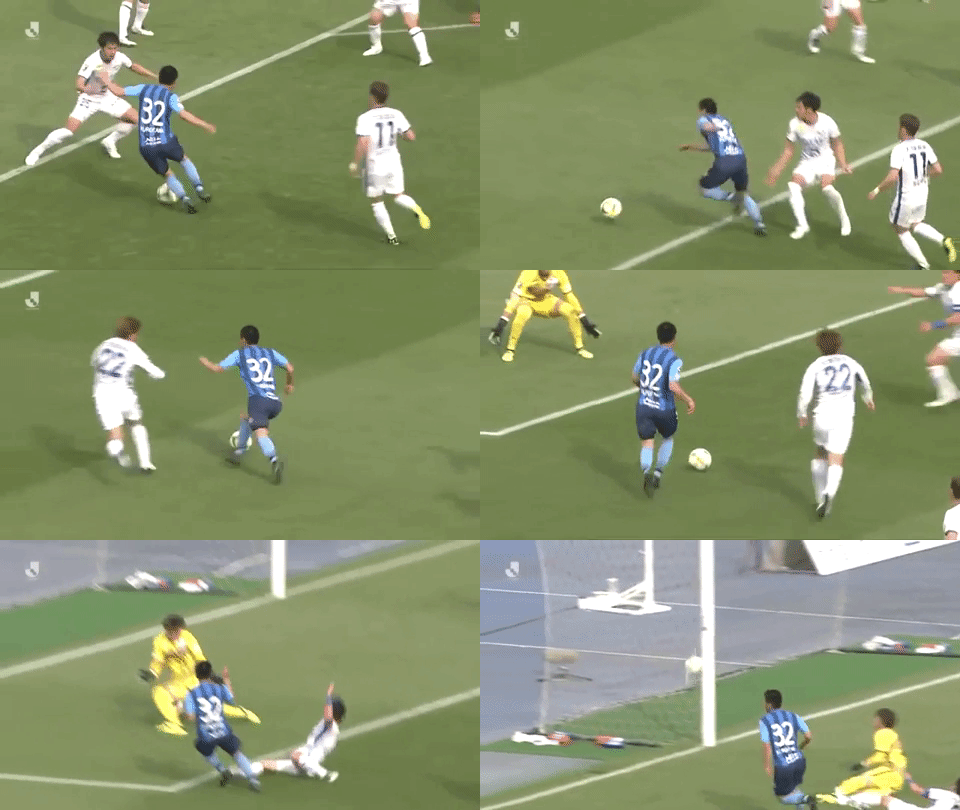
And indeed, they did that, but they even managed to do something more. In his first year on loan – where he played 28 games and scored three goals –, Kurokawa had Shigetoshi Hasebe as a head coach and the team was playing a nice brand of football, with Daizen Maeda and Ryohei Hayashi up front. In this setup, Kurokawa featured as a side midfielder, mostly on the right flank, capable of creating quick transitions on the counterattack.
When Hasebe was confirmed as the manager for 2019, Mito actually endured an even better season than 2018. After ending tenth on the table, HollyHock even led the pack for some weeks, before coming back to Earth and missing the playoffs for just for the goal difference. Despite losing both Maeda and Hayashi – the first went back to Yamaga, the second switched to Tokyo Verdy –, the club didn’t lose any traction.
Without a serious injury that limited his time on the pitch in 2018, Kurokawa became a key-piece for Hasebe’s wonderful run last year. Mito didn’t lose any of the first 12 games and put the Omiya-loanee in a different setup: no more run on the flanks for him, but rather a more central role, closer to the only forward on the field. Theoretically it was a 4-4-2 with a double pivot, but Mito in the end opted for a sort of 4-2-3-1.
A tough stage to manage
Kurokawa’s role in this setup was crucial, because he was able to link with the other two offensive midfielders on the pitch – two among Yuji Kimura, Yuya Asano, Shunsuke Motegi and then Takaki Fukumitsu – and creating a lot of chances with his vision. When HollyHock acquirend Koki Ogawa on loan from Iwata mid-season, Kurokawa was more often fielded in the original role, with Hasebe playing with two forwards (Ogawa and Shintaro Shimizu).
Once the season was over, it became clear that Kurokawa would have finally joined back his hometown club, in desperate need of some creativity and a new symbol for the project. Omiya lost twice the promotion via playoffs and Takuya Takagi – who joined Ardija in 2019 – was eager to have a player capable of changing the tempo after losing both David Babunski and Genki Omae last Winter.
Moreover, Kurokawa fitted the kind of football Takagi wanted to play, at least on paper. Takagi’s fortunes at V-Varen Nagasaki were based on a 3-4-2-1 lineup, the same he wanted to implement at Omiya. Unfortunately, Omae and Babunski weren’t sacrificing enough in the defensive terms, while Kurokawa would have been able to do so, given his experience in the Hasebe experiment at Mito.
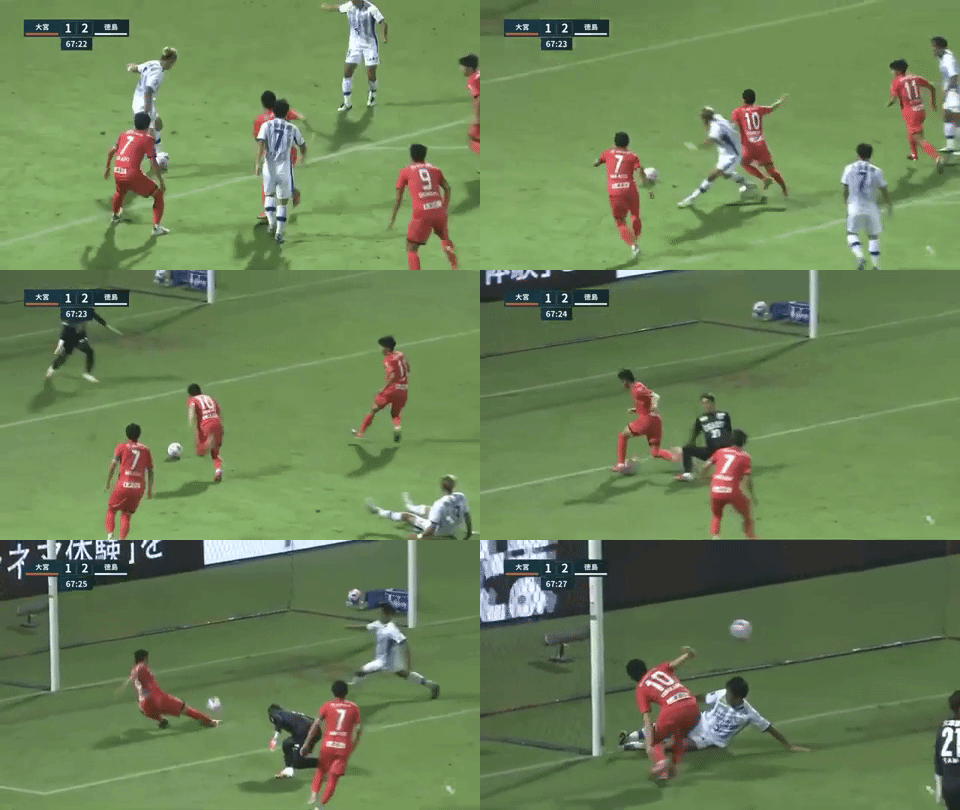
Unfortunately, reality has planned out a different path for Omiya. From the start of the season, Ardija seemed to lack something for a real at the direct promotion. While V-Varen and Giravanz were flying, Takagi’s bunch kept their Top 2-slot until Matchday 9, where they started a definite fall in the table. The 3-4-2-1 saw changes of personnel and not even the arrival of Ibba seemed to have helped the club turning it around.
Despite this, the skills of Kurokawa aren’t debatable. Like his Twitter nickname would suggest, he envisions himself like a Iniesta-esque kind of player: capable of playing both on the flanks and in the middle, the current no. 10 of Ardija has a good vision of the pitch and, especially on an open view, he can quickly bring the ball on the other side. His passes and his dribbling skills are over the top for a J2 club, but he has to develop the rest of his game.
Because if it’s true that he has a 44% rate of success in dribbling and an almost 80% of completed passes, he has to build some muscles, because otherwise he might have some troubles in dragging Omiya out of this slump they’re currently in. And this suggestion might come handy also for next season, since Ardija’s promotion run probably ended today with a 3-0 home loss against FC Ryukyu (and there are a lot of injuries. Like a lot).
Kurokawa was never changed in his role – this no. 10 position alongside another forward, just behind the no. 9 –, but this position doesn’t seem able to unlock his real potential. You have to wonder if this kind of lineup is hurting his skills, with the field way too crowded compared to his time at HollyHock.
A classical music that could go along with his YouTube comp
Grey on the horizon
Nevertheless, Kurokawa seems a really good prospect for Japanese football. Yes, not the brightest one we might encounter in this column – we’ll get to that in the next episodes –, but it seems the context isn’t helping that much. Troubles with Omiya are clear: after two failed promotion runs with two different managers, the club tumbled due to a crazy schedule and with a lot of recent pillars who left last Winter.
The new generation and the acquisitions done are not working. Sure, Ippei Shinozuka has grown into an interesting profile and some youngsters are getting solid time on the pitch, but you wonder if Ardija will be able to a playoffs contender next year, let alone a favorite for a direct promotion. And it’s not easy also to decide on the manager’s role: Takagi has been a guarantee for most of his career. Is it mainly or only his fault?
About Kurokawa, he might become the polar star to look up to if Omiya want to get back to J1, but these technical conditions don’t look prolific for him. Yes, Ardija became the ninth-youngest club in the second division, after having been the fifth oldest in 2019, but the quality isn’t the same. Do they need time? Is this just a transition season? Or do they need better and/or more fitting personnel, both on and off the pitch?
There are a lot of questions revolving around their future, but we hope (and we kind of believe) Kurokawa must be a pillar for rebuilding. Otherwise, he might be on the run for a J1-gig, but we wouldn’t take that road after a season like this. It’s better to build back his status rather than just booking a random spot at a bottom table-club. Kurokawa has the potential to thrive; he just needs the right conditions to do so.
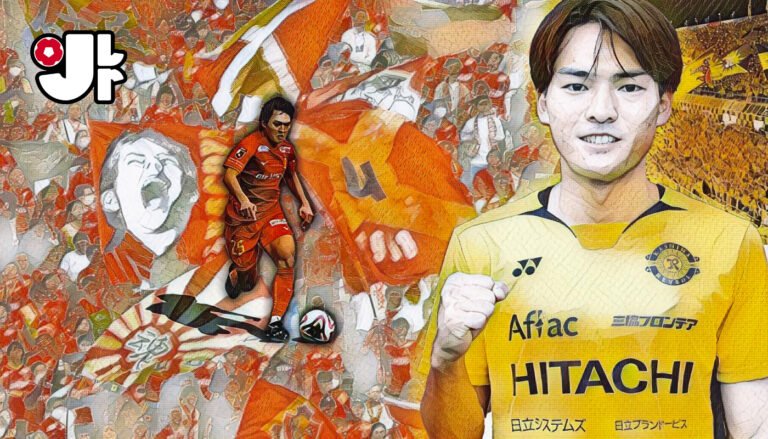

[…] Atsushi Kurokawa (Omiya Ardija) […]
[…] potential of Atsushi Kurokawa was well-depicted by this page already two and a half years ago, in our column “Po10tial”. Like for Takahashi, the profile is […]