After 30 years of pro football in Japan, it’s very hard to find clubs that haven’t yet tasted the thrill of a final. A single match in which you can play for everything – whether it’s a cup final, the J.League Championship, the Suruga Bank Championship or even 90 minutes to fight for a relegation spot. You name it! Nevertheless, there are three of them who are in that situation in J1.
The first two are an absolute debutant, and a relegated side – Machida Zelvia never had the chance of doing that, and the same could be applied for Sagan Tosu (who though never won a single trophy in general in their club’s history). But there’s another club who’s been out of this contention – being around in J1 since 2004, before a long purgatory in J2 (and they won the second division twice, 2003 and 2022).
They had always a great support from the North, but they never reached a final. The closest they came to it was in 2015 – when they were already struggling in J1, but had a good run in the J.League Cup. They even defeated 2-1 Gamba Osaka at home in the first leg, only to fall 2-0 in the return leg in Osaka – and what’s worst, they did that in injury time, when Hiroki Fujiharu closed the context.
Nine years later, Albirex Niigata are finally there. They did it without surprising too much – their return in J1 has been shiny, full of talent, and exciting players. But now the J.League Cup final against Nagoya Grampus – to play in Tokyo on November 2nd, 2024 – represents the chance to put a point to a wonderful renaissance that Niigata lived under head coach Rikizo Matsuhashi.
Finally Alive
We don’t wanna bore you with the full recap of Albirex Niigata’s entire history – because in the end it’s something we touched upon back in the Spring of 2022, when the club was finally getting some traction and they were ready to take the leap back to J1. It’s something that in the end happened that year, when Niigata won the J2 League by a landslide, and played some football that was rarely seen before.
To get there, Albert Puig was the first piece of the puzzle. He changed style for the club – who were notoriously very defensive, and that was the reason why they survived a long time in J1. But then to go back to the promised land, Niigata needed something different, and Puig brought it. But then the Spanish head coach left Niigata to join FC Tokyo, and then Albirex took a different direction.
Instead of taking a Tokushima-esque decision – we’re losing Ricardo Rodriguez, let’s have another Spanish head coach in Dani Poyatos -, the board opted to promote Rikizo Matsuhashi. The class ’68 had a minor career as a J.Leaguer – playing with Marinos, Kyoto, and then closing his career at Jatco Soccer Club, a minor squad from Numazu, who dissolved in 2003 (the year when Matsuhashi decided to retire, at age 35).
Reinventing Themselves
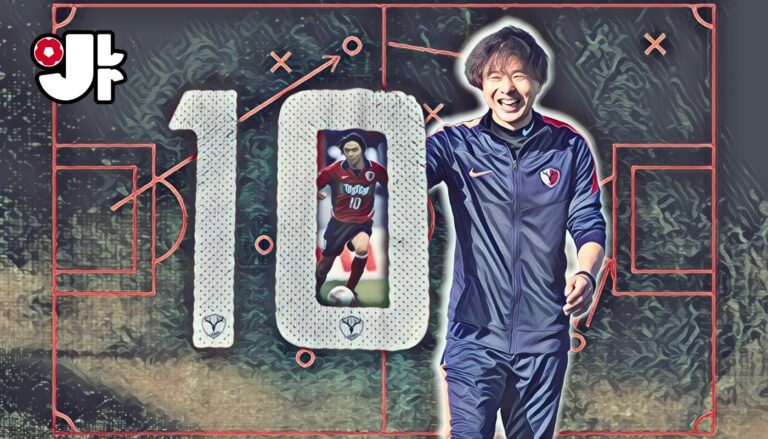
Matsuhashi took a very long road to get where he’s now. He coached at Jatco while playing, but then came back to Marinos – where he stayed for 17 years. He went through the ranks, going from a simple U-13 coaching job to being involved with the first team as an assistant manager under Ange Postecoglou. When the opportunity presented itself, he left to join Albirex Niigata in 2021 – first an assistant coach, then getting the promotion to the top job.
Just like Toru Oniki for Kawasaki Frontale, Matsuhashi adjusted the offensive frame of Albirex on the pitch. In the three years before his advent, Niigata scored 71, 55 and 61 goals – always being among the best attacks of the second division. Sadly, the defence couldn’t keep up – 52, 55 and 40 goals conceded. Matsuhashi improved this aspect, with just 35 goals conceded in 2022, and just 40 in their maiden campaign in J1.
Matsuhashi even decided to sacrifice some of the inventive upfront for a more balanced approach – Niigata had a negative goal difference in J1, which is normal for a newly-promoted team, but also a steady defence. They had a rough patch between April and June, but then a good final stretch of the season brought them to 10th place. And now Albirex are 99% sure of playing another season in J1, having (already) matched the same number of points from 2023.
The Cup of Statements
In the last years, winning the J.League Cup has served the purpose of putting a flag on the map of Japanese football for teams who have done very well in the last decade. It’s happened with Avispa Fukuoka last year, acknowledging Shigetoshi Hasebe’s wonderful work; it’s happened with Nagoya Grampus under Massimo Ficcadenti back in 2021; it happened as well in 2018 when Shonan Bellmare won their first title under Cho Kwi-jae.
It feels like it could have the same meaning for Albirex – who have a big support, but would then need this moment to consolidate their place in the map of Japanese football. They’ve been very good at transforming, but they also lost many talented players in the last three years – just to make some names: Takahiro Ko (FC Tokyo), Shunsuke Mito (Europe), Shion Homma (Europe), Ryotaro Ito (Europe).
It’s not the first time we’ve lauded what Niigata have done in the last 5-6 years. It wasn’t easy to do such a transformation and keep it stable in the top-flight. Sometimes you can’t have both – but at least for now, Albirex have pulled it through. They launched talents, they’re playing good football, they even had one of the most talented foreigners J.League has seen. It’s all coming together – it’s just the final hurdle.

[…] J2 title, the first return season to the J1, and the J.League Cup final lost at penalties in 2024, was there more that Matsuhashi could give to Albirex? Probably not, so the change makes sense. Why FC Tokyo does anything? Tough to say, but they’re […]