“Sliding doors” may be an over-rated concept, but sometimes it makes you think. Think about how things could be different seen from another perspective, especially in a country like Japan, where football is young and pro-football is even younger. J. League has gifted us wonderful histories, but how could this league become if regional criteria would come into play?
We’ve always heard that Kansai and Tokyo metropolitan area are the strongest in this country (with the risk of overpopulation in these areas), but is this true also in football? Looking at which clubs won the title in the last years, you would say “no”: Hiroshima and Ibaraki Prefecture looked good. And a Saitama-based club brought home the continental trophy after being the last one to win it, a decade ago. But it would be the same with Prefecture-based squads?
So we came up with this little fantasy league, where every player is chosen due to his birthplace and so due to his prefecture. It was a strange game, but it led us to a different view of Japanese football. In every episode, we’ll try to visit Japan for what it is, a land with different landscapes and scenarios. We did it also to value everything that this nation can offer: we’re no travel guides, but we may add here and there some general tips for every prefecture, besides their football history until now.
A few rules:
- Every squad features from 11 to 23 players, depending on the depth of the Prefecture;
- Not every Prefecture has its own squad, since not everyone of them was able to feature the needed players to form a team;
- You will find many surprises.
So let’s go with episode no. 6 , where we’ll talk about Hiroshima Prefecture.
It’s not easy to find many places in the world strictly tied to a certain historical event, but (unfortunately) Hiroshima is in this category. What happened on August 6, 1945 will always be remembered; it’s a part of human history, despite that event represented how humanity can be sacrificed in the name of historical necessities, by any means. Yet, Hiroshima is a lot more than that day, the day which changed their (and Japan’s) forever.
Alongside Nara and Tokyo, Hiroshima Prefecture is featuring not one, but two UNESCO World Heritage sites (the Atomic Dome and the Itsukushima Shrine, with the latter located in Miyajima). Just like other Prefectures in Japan, the automobile industry has a solid hub in Mazda – the name of the company took a hint even from religion, precisely from Zoroastrianism and its creator, Ahura Mazda – and the area is just out of the Top 10 Prefectures for both area and population. Yet, in Japan’s history, Hiroshima represent a must-watch for many tourists from all over the world.
In recent years, even football may have played a role in drawing some attention to Hiroshima. The Prefecture features several sports team – Dragonflies in basketball (even former NBA player Carl Landry is playing there), JT Thunders in volleyball, Toyo Carp in baseball –, but football’s one is the real deal in the last seasons. Sanfrecce Hiroshima are a known face for J. League viewers, but until seven years ago they were almost without a trophy: one J2 League, one Japanese Super Cup and five different finals – four in League Cup, one in Emperor’s Cup – all lost. Then Hajime Moriyasu came and changed the history of the club, bringing three J1 titles and three Japanese Super Cups, plus a third place in the FIFA Club World Cup.

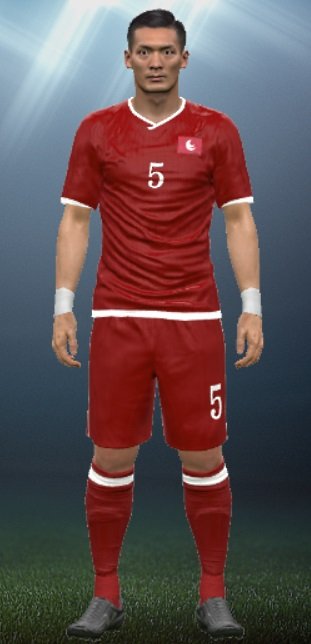
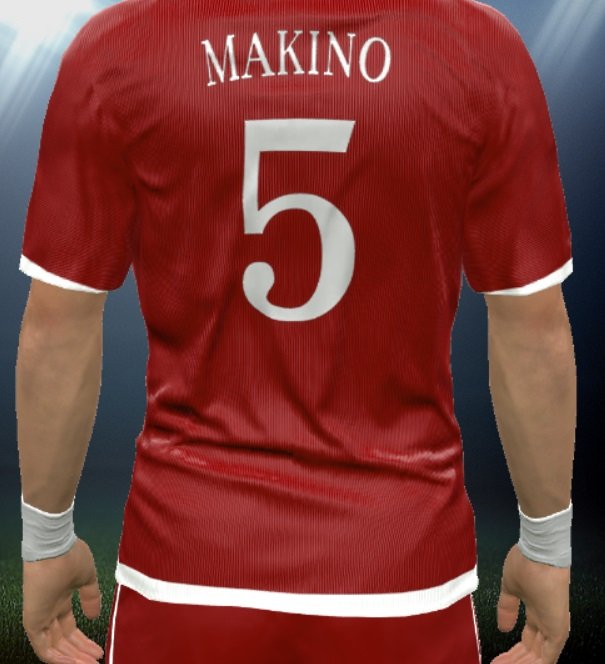
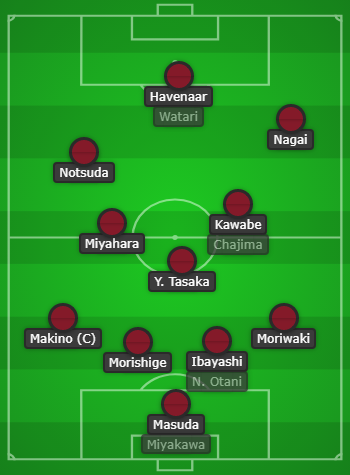
And if you think about it, many players actually thriving in J. League and featured in this Hiroshima-based squad have passed through Sanfrecce. In composing an ideal team, a 4-3-3 line-up is the best solution. We would start with a tough choice for the keeper, but the main option could Takuya Masuda (class ’89), currently on loan at Machida Zelvia, but registered with Sanfrecce Hiroshima.
The back-line of four is really good, since we could find Ryota Moriwaki (’86) and Tomoaki Makino (’87) adapting as full-backs. They both featured for Sanfrecce Hiroshima for more than a decade between youth ranks and first squad before both joining Urawa Red Diamonds, even though with different paths. Alongside them, we could field Akira Ibayashi (’90), who just joined Sanfrecce this Winter, while Masato Morishige (’87) played for the club only at the youth level before leaving the Prefecture for Oita Trinita.
Going up the field, the squad isn’t as strong as in defence: in the midfield we can see Kazuya Miyahara (’96), who just left Hiroshima to sign once it for all with Nagoya Grampus, for which he played in the last two seasons. Alongside him, there are Yusuke Tasaka (’85) and Hayao Kawabe (’95), who also were raised by Sanfrecce, but opted for different careers: the former had an European stint with Bochum between two solid periods at Kawasaki Frontale, while the latter just came back to Hiroshima after three good years on loan at Jubilo Iwata.
In front, a strange trio may come into place. First you have another Sanfrecce-raised talent like Gakuto Notsuda (’94), who needed several loans to find the inner talent he showed in his first pro-days. With Takuma Asano, he seemed destined to greatness, but only in Sendai he found back his groove after disappointing showings with Shimizu and Albirex. On the other flank, you might have the speedy Kensuke Nagai (’89), who in my mind will always be tied to the wonderful run at the London Olympics in 2012. As a no. 9, Mike Havenaar (’87) is your man. Fun fact: he just moved to Thailand from Vissel Kobe.



Excellent!
Please, make Kumamoto or Kagoshima next! Despite being small prefectures, both have produced great players.