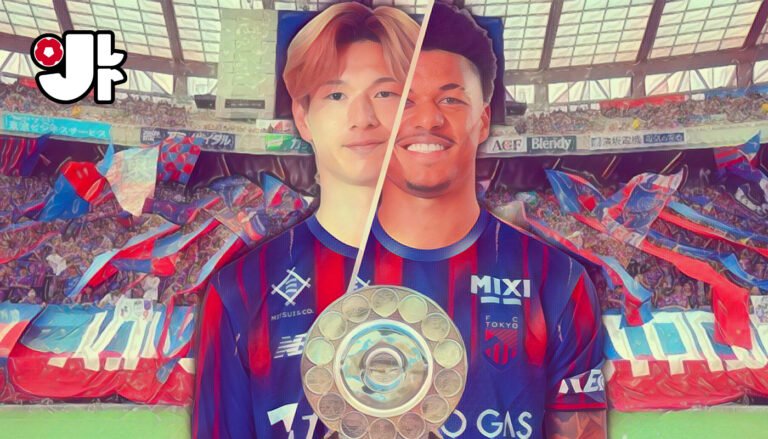
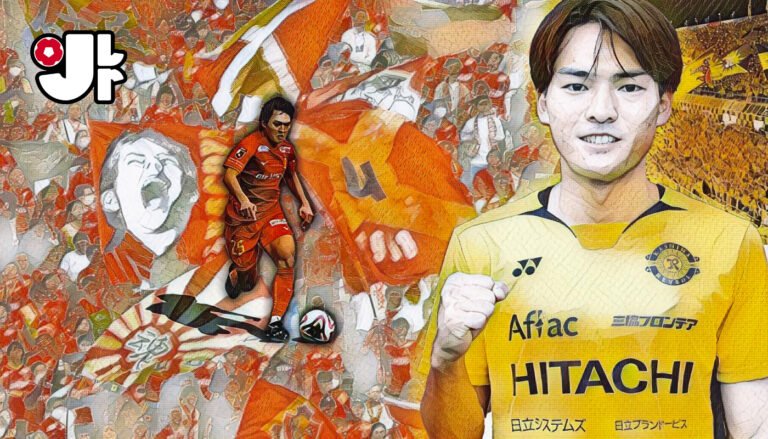
We’re used to reason about Japanese cities in the football ladder as hubs of different relevance compared to the national scenario. For example – Ibaraki Prefecture as no leverage nation-wide, but in football, they currently host the greatest J.League team ever (Kashima Antlers, recently voted as so in one poll here as well), and a newly-promoted team in J1, Mito HollyHock, who are finally out of the dark from the J2 League.
On the opposite side, Tokyo is the absolute centre not only of Japan, but in general of the East Asia, but in football, they struggle. Yes, the recent rise of Machida Zelvia has changed things a few, but FC Tokyo and Tokyo Verdy struggled in the recent decades, had both stints in the second division, and all these three teams are in J1 at the same time, but it’s hard to tell if any of those will have a shot at a title run.
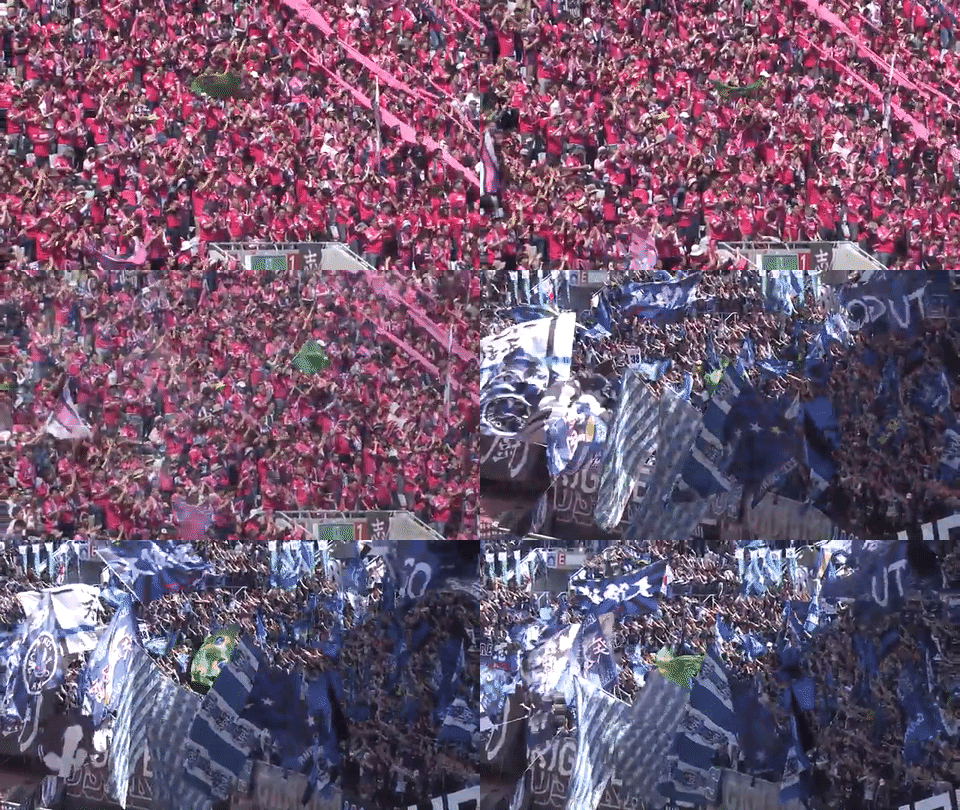
In this paradox, there’s one city which had an overlap between its football reality and the relevance nation-wide: Osaka. A decade ago, Gamba Osaka became the second team to achieve a national triple (after being promoted from J2), and Cerezo Osaka won their first three trophies ever in the space of just four months. It seemed a promising beginning to the top, but instead – 10 years later – both realities are ready for a season of struggle.
I think that, when these two clubs reached that peak, many would have expected them to continue that trajectory. Instead, they have two disappointing developments, although very different between each other: Cerezo Osaka are stuck in mediocrity land, while Gamba Osaka were able to almost got relegated and finish second in the last 5 years. So, what’s really next for Osaka, football, and the way the city is represented in the J.League?
Welcome to Mediocrity
Let’s start with Cerezo Osaka, because I think their case is way simpler – they just can’t reach those heights from 2017-18 anymore. What happened after that? Well, their head coach Yoon Jung-hwan left, making space for Miguel Angel Lotina, who turned Cerezo into a defensive juggernaut. They recorded the best goal conceded-per-game ratio in J.League history in 2019, but things fell apart from there. Furthermore, they gave up their flashy offensive style for an archi-defensive structure.
This wasn’t liked, and then Cerezo let Lotina go for a return of Lèvir Culpi, who lasted just six months, before Akio Kogiku took over for three years. After that, Arthur Papas had a chance as the head coach and built something in these 18 months, only to leave at the first Saudi Pro League offer – by Al-Ettifaq, not exactly football giants. And with Pablo Machín taking over, it looked like a last-minute fix to cover Papas’ departure, given how Machín’s recent track record doesn’t inspire confidence.
In the meantime, the best season for Cerezo since Lotina left was a fifth place in 2022, with two J.League Cup final losses. Then 9th, twice 10th – with good attendances and a nice brand of football, but incapable of leaving that mid-table anonymity. And it’s okay that Cerezo could struggle to do that, because they don’t have the resources or the history of other clubs… but it’s the same squad who once had several national team members, plus foreign stars (e.g. Diego Forlan).
The only Cerezo player to finish in the J.League Best XI since those trophies was Seiya Maikuma in 2023, and he left for AZ Alkmaar. Other folk heroes like Jonjic, Kakitani, Matsuda either departed or just dipped in performances. Romantic options like Kagawa and Inui are a good international booster, but they’re not future-bound. Almost none of the youngsters from the academy properly stepped up (Fujio left, Nakajima returned only to leave again for good, Kitano and Ishiwatari have both left for Europe before leaving any significant mark in a Cerezo jersey).
Hell Frozen Over
Gamba Osaka have a very different conversation to make. Since that national treble, they didn’t have too many coaches, but they risked relegation a couple of times and ended up as well runners-up. Everytime they ditched a head coach with whom they had a multi-year run, they immediately fell into a ditch, which took time to get out from. And it seems they might be back to square one due to some unfortunate events this Summer.
Let’s start from afar: Kenta Hasegawa left Gamba Osaka in 2017 after five years on the bench and multiple trophies (one season too late, IMHO). The club tried arch-rivals Lévir Culpi as head coach, which drove Gamba straight into the ground. Gamba sacked Culpi and promoted Tsuneyasu Miyamoto, who brought steadily Gamba back to the top (second in 2020, plus two finals). 2021 pushed Miyamoto out, but neither Tomohiro Katanosaka nor Hiroki Matsuda could equal him.
After a 13th and 15th place, Gamba turned to Dani Poyatos to turn things around. 2023 was terrible, but then the Spanish head coach brought Gamba to a fourth place, a J.League Cup final, and a continental run. Then they got rid of Poyatos to hire Jens Wissing, a relatively unknown coach, who though lifted the 2025-26 AFC Champions League Two trophy… only to leave suddenly this Summer and join Al-Ittihad as the new head coach (Saudi money, uh?).
In all of this, it’s almost embarrassing to enlist the amount of talent Gamba could count on. And we did! I’d argue as well Gamba didn’t exacly exploit all that potential, otherwise the results wouldn’t have been a rollercoaster. Now, with a more stable team and finally some light at the end of the tunnel, the head coach left… which is a shame, because Gamba built something multiple time despite losing talent or not fulfil their entire potential.
Osaka, what’s next?
The league situation puts Osaka in a strange place. Gamba will have to play continental games, Cerezo won’t, but… they both look shaky. With their current squads and the changes they went through – especially in the dugout – do you see them finishing in front of Kashima, Sanfrecce, Kashiwa, Vissel, and some others? I struggle.
Cerezo Osaka lost Nelson Ishiwatari – who left Cerezo after just six months and joined Sint-Truiden. Also club legend Kim Jin-hyeon is gone, just like Motohiko Nakajima. Theoretically, the potential is there, since Cerezo have a solid goalkeeper (praise Kosuke Nakamura), interesting centre-backs, experience on the flanks, Lucas Fernandes back from injury, and Yumeki Yokoyama plus Masaya Shibayama lighting up the field. I just think that, together, this won’t be enough to change their current status (and they’re a bit thin upfront).
Gamba Osaka have a completely different situation. Depth is there (especially in defence and in front), and they had a solid foundation, but they lost both Harumi Minamino (right when he started to show something!) to Urawa Red Diamonds and Takato Yamamoto to Borussia Dortmund (where he’s already making some waves). Furthermore, to replace Wissing, they promoted Tomokazu Myojin, whom I respect a lot as Gamba and Japan legend… but we don’t know if an internal replacement will be the right call.
I don’t know how I could see these clubs going beyond that mid-table status. And that’s a shame, because there was a time when Osaka represented maybe the best Japanese football could offer. Take not just 2014-2019, but also 2010-2011 – when Gamba had their dynasty still going under Akira Nishino and Cerezo had Takashi Inui, Shinji Kagawa, Hiroshi Kiyotake, Yoichiro Kakitani, and Takumi Minamino in the space of four years. Those days are gone.