It’s a strange season, isn’t it? The schedule of November ran without any stop, the J. League Cup final has just been postponed due to a COVID-outbreak within the Kashiwa Reysol team (giving us the chance of a 2021 game!) and even Kawasaki Frontale are taking some time to rest (having lost their second game in this 2020 after a run of 14 matches with 13 wins and one draw).
But the real news about the J1 League come also from the bottom of the table. Sagan Tosu aren’t bottling it like we’ve expected them to, while Vegalta Sendai and Shonan Bellmare are facing tough seasons. In the relegation zone, though, we also find another squad: Shimizu S-Pulse. Not unexpected, since the side from Shizuoka barely avoided relegation last year only in the last game, thanks to a magical shot by Douglas against Tosu.
After the eighth place of 2018 and the loss of certain talents from their young core, S-Pulse struggled to find new heroes (although we mentioned one recently) and in general to attract solid players. If the other side of the Prefecture isn’t exactly laughing, currently playing J2 football, Shimizu had to ask themselves some tough questions for a rebuilding. That’s why they looked to Yokohama.
While everyone was celebrating Ange Postecoglou and the egregious run of Marinos to the 2019 title, Peter Cklamovski – his historical assistant, who has been with him since the Greek times at Panachaiki F.C. – opted to fly solo. Taking the reins at S-Pulse wasn’t meant to be an easy job, but it did get tougher than forecasted pretty quickly. And maybe that’s why we came to an unexpected conclusion last week.
After two thirds of his first season at helm, Cklamovski and S-Pulse just parted ways. Too much to fix, too many things were not working and that’s when everyone opted to pull the plug, despite Shimizu had just taken one solid point drawing 0-0 @ Reysol. Like the “Brisbane Times” reported, probably the lack of activity in both 2020 transfer market windows flustered the manager, who opted to leave.
But that’s all that didn’t work in his adventure? Was S-Pulse the right club to recreate the Marinos experiment? And what’s in the future of the club now, after this strange season and with questions marks on the horizon?
The problems on paper…
Let’s start from a sure concept: S-Pulse needed time to start fresh. And you might observe that a season without any relegation actually provided the perfect chance to do so. In the end, the club came from a frustrating season, where the “worthy of a mention as MVP” performances of Douglas avoided the worst. But was there something beyond him, when the Brazilian left for Kobe last Winter? The answer is probably in the middle
There was some material to work on, but nothing tangible has been done to fix the problems in the roster. And this goes despite S-Pulse have probably one of the best foreign bunch among J. League clubs: the Brazilian colony has been on a solid and dependable level, including the reliable Elsinho and the discovery of Renato Augusto. If you consider the goals of Carlinhos and the contribute by Teerasil Dangda, that’s good.
But what about the rest? S-Pulse – and in general Shizuoka Prefecture – have always been known for being the cradle of key-figures in Japanese football. Most recently, Shinji Okazaki and Jungo Fujimoto started there, while Koya Kitagawa joined Rapid Wien after flourishing with Shimizu. Yet, the future doesn’t look as bright, despite some profiles are in fact rising through the ranks.
Yugo Tatsuta has also worn the captain’s armband, but we have some doubts he might reach JNT-levels. After several J2 seasons, Kota Miyamoto hasn’t conquered a starting spot, while Yasufumi Nishimura needs to play somewhere else. We’ve already talked about Kenta Nishizawa, while Yuta Taki is off to Toyama on loan and Riyo Kawamoto is too unexperienced to be judged in this mess.
Probably the embodiment of this stagnation in developing youngster is 26 years-old Kenta Ishige, once tipped to be the “next big thing” for Japanese football and now still looking for a new start within S-Pulse. Sure, some injuries took a hint on him, but we’re nowhere close to what many fans hoped to see.
Positive notes? Daigo Takahashi, now on loan at Giravanz Kitakyushu, looks already fit for J1, but he’s not there right now. In the offensive department, we have also seen some sparks by Yuito Suzuki, who seems really promising, otherwise he wouldn’t have played 24 games until now. And in goal, the future might be on the shoulders of Togo Umeda, who has played just 15 games, the highest amount among the five keepers.
Ah yeah, the keepers. That’s another massive problem for S-Pulse: since Yuji Rokutan left to go on loan at Yokohama FC, S-Pulse hasn’t found the right player to be fielded. Neto Volpi seemed the forecasted choice, but he soon lost his spot. Then Umeda found some confidence, before being benched for Takuo Okubo (!) and even Yohei Nishibe played one game once he recovered from his injury. This is madness.
Last but not least, Cklamovski was pretty vocal about the missed chance of signing stars of any kind. Beside losing Douglas and Rokutan, S-Pulse gave up also on Ko Matsbuara, who joined the Japanese contingent at Belgian side Sint-Truiden. Some solid J. Leaguers came last Winter – Yusuke Goto and Takashi Kanai, for example –, but no one that could have moved S-Pulse from the bottom of the table.
…and on the pitch
In a season where the pace for schedule has been terribly fast, results haven’t helped. On the first games of the year – in February, when COVID outbreaks touched Asia, but Japan momentarily kept on going –, S-Pulse started badly by losing both matches against Kawasaki Frontale in the J. League Cup and FC Tokyo in the league, conceding eight goals and scoring just two.
Before our eyes, it seemed pretty normal: the scale of Cklamovski’s project wasn’t easy to implement, so you needed to be patient for eventual progresses. Unfortunately, even when the league came back in early July, results weren’t there: S-Pulse collected four defeats in a row before scoring one point against Sagan Tosu and then clinching their first win at home against Oita Trinita.
Nevertheless, this didn’t start a rise in performances. S-Pulse collected another run of seven losses in a row, which then became 12 in 13 games played between August and October. Despite the clear goal of this project – developing the #AngeBall we have all witnessed in Yokohama with Marinos –, the roster wasn’t at the same level of the one Postecoglou had even in 2018 (we’re not even comparing it to 2019).
Cklamovski had to test several line-ups, starting with a 4-3-3 or 4-2-3-1 and then switching to 3-4-2-1 when things were going dreadfully. It didn’t help anyway, because S-Pulse currently have concerning data on their backs: they hold the sixth-worst attack, but most of all the worst defense of the league. At the moment we’re writing, after 26 games, Shimizu have scored 34 goals and conceded 55.
A -21 goal difference is better just than the one hold by Vegalta Sendai, who are -26 and they’re last, trailing three points from S-Pulse. In the end, the best scorers for S-Pulse in J1 are all Brazilians: Carlinhos bagged seven goals, while at four we find central defender Valdo (!) and 32 years-old striker Júnior Dutra. Not exactly what you would like for a project looking to the future and for a certain brand of football.
Even in a year zero – where you have to build the basis of your revolution –, 29 players entered the pitch and this hectic schedule also didn’t help solidifying the starting eleven. After an effective four months-tenure, Cklamovski then opted to not retain his position until the end of the season, leaving us pretty surprised and S-Pulse trying to navigate this season until the end through the hands of caretaker Hiroaki Hiraoka.
What’s the takeaway here?
It’s tough to say if there’s even someone who’s going to gain something from this experience. In whichever direction you might look – the coach, the players or the club –, this seems a squandered opportunity for everyone involved. Especially in a strange season, where testing was basically allowed and you had time to figure out what to do to reach a certain goal, which in the end was the winning philosophy implemented in Yokohama.
The club has lost one whole season, not taking advantage of the fact there are no relegations this year. Sure, winning just three games through Cklamovski’s first tenure didn’t help, but the goal seemed to be different. Can an already struggling team improve their performances from last year? No. Can they do that if they try to implement a different philosophy? Yes, they might make it, but it’ll take time.
And this time was available, given the strange structure of this season. When Cklamovski was hired, I thought of the 2018 endured by Marinos: they had way better personnel, but the same struggles to fix. But compared to Yokohama, the club took a different decision, accepting to part ways with the Australian head coach. It’s tough to say if this will work or spectacularly backfire in 2021.
You can’t even be sure what’s good to take in this situation for the squad itself, because there hasn’t been a particular development and the average age is currently 27,3 years old, which put S-Pulse in fifth among the oldest rosters in J. League. Furthermore, as we’ve seen before, youngsters are not exactly thriving, besides a couple of exception. So what’s the positive for the future? Can S-Pulse avoid relegation next year, when FOUR teams will drop?
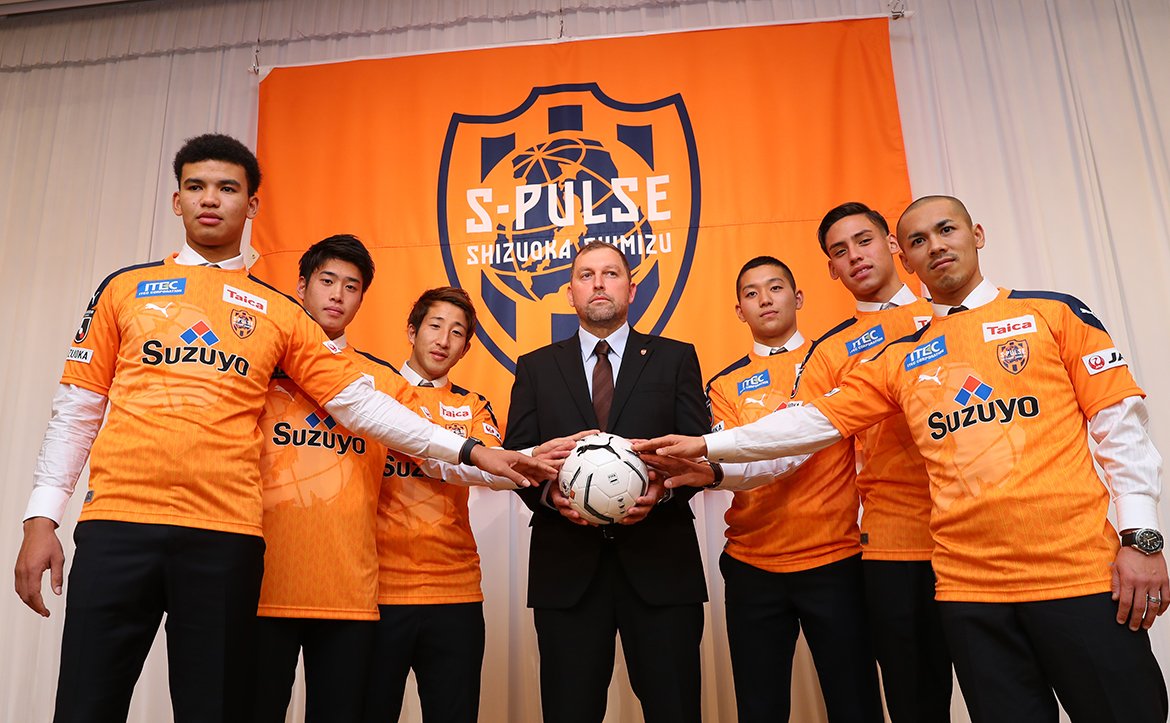
And what about Cklamovski? He’s tipped to stay in Japan and look for another spot to land, although it’s tough to see some big clubs getting rid of their technical guides. Would it be another project to rejuvenate from the start, maybe even considering J2? In that case, there would more than one club – Shonan, Júbilo, Kyoto – to pick from. But you can’t shake the feeling that interrupting abruptly this project won’t do any good for everyone.

(Hideki) Ishige is / should be a key player but has been injured all season… 🙁
Yeah, but his developing trajectory has declined a long time ago. When he was on loan at Fagiano, he seemed to rise back, but it didn’t work on the long run. Remember when there were talks about him going to Man City?
Very interesting article, thank you!
Do you think it’s possible that the S-Pulse board looked at what’s happened with Marinos this year and wondered if investing heavily into Ange-ball was such a good idea? I know that the schedule because of the Champions League has hurt Marinos a lot, but in reality they were struggling before that. It seems that the best teams have worked out how to stop Marinos playing and they now need a plan B.
Maybe S-Pulse felt that way too and decided not to sign more players for Cklamovski’s system?
I guess the major picture is on Cklamovski’s hands. Surely there are some differences between the two situations. I’m deeply curious to see not so much what S-Pulse will do, but what the head coach will do. He looks to another Japanese gig, but which?
It seemed a strange move to me, but I was thinking that Shimizu must be thinking about recruitment for next year and discussed plans with Cklamovski. I guess maybe Cklamovski didn’t like what he heard and left. Like you say in the article it’s difficult to see a J1 team who would take Cklamovski now, maybe Kyoto would be a good match?
Surely it would be nice to see. Like I wrote in the piece, probably Jubilo would be the nicest option: they have to go back to J1, but I don’t see that happening soon.
[…] back at home, where he could be a factor at this point for a team that suffered a lot this year and didn’t have enough patience to support Peter Cklamovski’s project until 2021. With four relegations on the line in the next […]
[…] Props instead to two clubs. First: Montedio Yamagata. Surely, the start of the second season under Kiyotaka Ishimaru felt disappointing but letting him go on April 22nd could have backfired. Instead, the revolution of Peter Cklamovski is working a treat and, with playoffs reinstated in 2022, they hold a solid chance of having a good run. That’s also a revenge for the Australian manager, who was let go too soon by S-Pulse. […]
[…] – would have played in Cklamovski’s favour to implement his tactics with no consequences, but the club thought otherwise and they let go the manager to end up two years later in J2 […]