One of the cities with the best quality of life. The dream of what many people dream when they marvel over a travel in Japan. One of the most secure cities in the world. A 12 millions daydream which sometimes goes faster than you’d expect. But in football, Tokyo hasn’t been the center of the world: no club has won the J1 in the capital since 1994, when Tokyo Verdy were still central in the inception of pro football in the country.
Tokyo Verdy hasn’t won a title in 20 years, when they lifted the 2004 Emperor’s Cup. Different stories for FC Tokyo and Machida Zelvia, who both won the J2 League (respectively in 2011 and 2023), but the whole capital suffered from being away from relevancy. Titles were won in Ibaraki, Osaka, Yokohama, Shizuoka, Hiroshima. Kawasaki Frontale became a dynasty just over the other side of the Tama river.
Nonetheless, three Tokyo-bound team will face J1 for the first time together. Newly-promoted Machida Zelvia will tackle the top flight for the first time in their history, a decade after they were just playing in the Japan Football League. Tokyo Verdy are back in J1 after 15 years-drought, after the most incredible season ever. And FC Tokyo… well, they’re after another rebirth project. The second in three years.
And we’ll see some firsts. Machida Zelvia and FC Tokyo never played against each other – Zelvia reached J2 for the first time the year after FCT dominated the second tier and won the Emperor’s Cup. But Verdy have faced FCT last year in the Emperor’s Cup – where FCT struggled and needed PKs to go through. But we’ll get in April the first league match against each other in 13 years.
Back to the start
When Tokyo Verdy played the last season in J1, it was 2008. To give some perspective… it was the last season they achieved an average of more than 10k spectators (14,897). Yoichi Doi, Takashi Fukunishi, and Toshihiro Hattori were enjoying the last J1 moments in their careers. Hulk (!) was 21 and ready to leave to rock the world in a FC Porto jersey. Tetsuji Hashiritani, a legend of the club and a three-times Best XI, was coaching.
Since then, a lot of time has changed. Tokyo Verdy came close to a return to J1 only in 2018, when they lost the play-out against Júbilo Iwata after a draining season (they reached the playoffs as well in 2017). But only the arrival of Hiroshi Jofuku put everything together. He was the perfect man to launch them into playoffs contention with a solid game plan and they were the perfect gig to relaunch his profile. Despite all these good results from 2023, 2024 is gonna be rough.
Three relegations are back, and Tokyo Verdy tried their best on the transfer market – they powered up in the offensive department, taking in Tomoya Miki from JEF, and getting three interesting profiles on loan (Fuki Yamada and Yudai Kimura from Kyoto, plus Hiroto Yamami from Gamba). But losing Ren Kato to Marinos and not confirming Tatsuya Hasegawa and Hikaru Nakahara – two fundamental additions last Summer – might condemn them to a constant fight.
Rising power
For Machida Zelvia, probably one concept is clear: they’re here to stay. This is not going to be a mere outing in the top flight. In a decade in J2, they lingered into the playoff zone twice – but in 2018 they didn’t have a J1 license to feature in the play-offs and in 2021 there were no play-offs at all. When the moment came, the club did all the right moves in 2023 to grant themselves a real shot at this.
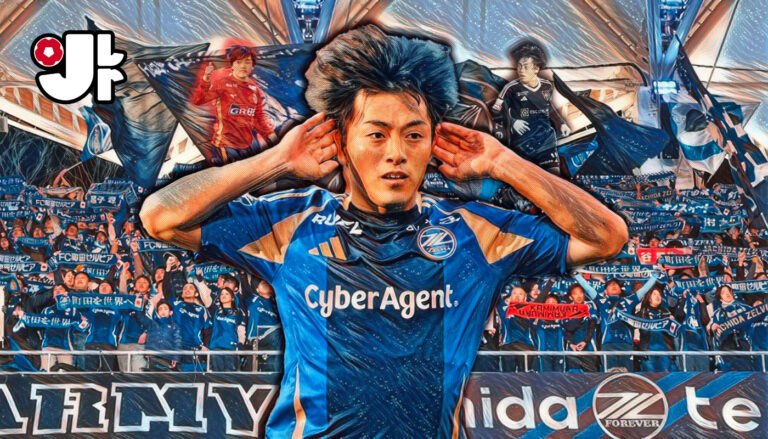
But probably no one expected Machida to annihilate opponents like they did. The guidance of Go Kuroda – the master behind almost three decades of success at Aomori Yamada High School – was a solid point to start from. Then a solid squad – with Erik, Daigo Takahashi, Mitchell Duke, Shunta Araki – made the rest. Zelvia were basically promoted in October, occupied the first place for 38 match days out of 42, and won the title with 12 points on the runners-up. And they’ve splashed the market even further this Winter.
The economic power of Cyberagent – the Tokyo-bound company behind Abema, and Cygames – did the rest. Zelvia brought on board a massive amount of players – including Na Sang-ho, Gen Shoji, Kazuki Fujimoto, Kai Shibato, Kotaro Hayashi, Oh Se-hun, Kosei Tani. And they made the loans of Araki and Shota Fujio permanent moves. They basically have a squad with a A-team and a B-team… we wouldn’t be surprised to see them cruising easily into mid-table.
The second attempt at a rebirth
When FC Tokyo fired Kenta Hasegawa in 2021, the path was clear – follow the Urawa Red Diamonds model and hire Albert Puig from Albirex Niigata to have a clean cut from the past. It worked in 2022, when FC Tokyo showed encouraging signs under the new management and closing sixth. Unfortunately, 2023 proved to be a disappointment – the board ditched Puig mid-season, and ended eleventh (the worst season since 2017).
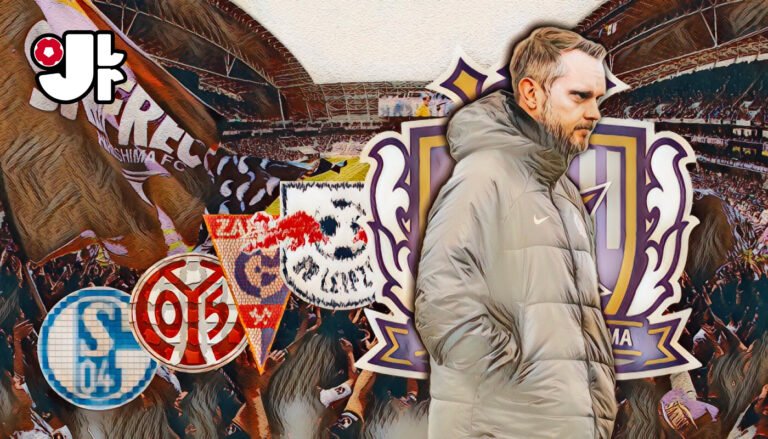
Is it possibile to reboot continuously, though? We would argue “no”, but it’s also true their second chance comes with an interesting choice. Peter Cklamovski was supposed to bring Montedio Yamagata back to J1 (we talked about it last pre-season), but a streak of consecutive defeats put him out of the job. And if Montedio found a solid replacement in Susumu Watanabe, Cklamovski landed the FC Tokyo job with a pace that would have put them into Top 5 contention.
Cklamovski, a man of projects, has now to deliver. With S-Pulse, he was booted before proving anything. In Yamagata, he did well, but failed in the right moment. FC Tokyo’s Winter transfer market leaves no space for misunderstandings: out Slowik, Adailton, Ryoma Watanabe, Perotti, and they lost Naoki Kumata (who moved to Belgium). Go Hatano is back for a no. 1 spot, Takahiro Ko and Tsuyoshi Ogashiwa are great additions, plus Keita Endo and Ryotaro Araki could be bargains if they recover their form.
It’s an interesting market, but will it be enough to aim to Top 6 and swing away Zelvia from the supremacy in Tokyo? Tough to say. The keeper situation needs to be sorted out, they’re a bit shaky in the centre-backs department, and they have a bunch of youngsters – Kota Tawaratsumida, but also Yuta Arai, Ryunousuke Sato and Soma Anzai – who might be surprising adds. But the situation has never been more interesting to witness in Tokyo.
J1 League will start in a few days, but we’ve already published a piece over J2 – just look at how the situation will be for Yokohama FC in 2024.
[…] talent factory has to recover some steps, but we’ve already mention another J1 team – Tokyo will live through a special season, with three teams in the top-flight, and hierarchies to […]