Sometimes in life you get thrown curve balls – a fitting metaphor especially for Japan, a country where baseball is still the no. 1 sport (who knows if that will last). And the protagonist of our story had many: a university-ending injury, some setbacks, team changes both in the roster and with him moving around the country. Nonetheless, he always glanced at life with inner peace and a smile on his face.
He said it himself once: “It might be an exaggeration to call it my motto, but I try to keep in mind the phrase “Everything in life is just a scratch except for death,” which a senior from Hosei University taught me. If you don’t dwell on small things and think of them as just scratches, it makes things easier mentally.” His goal, though, was big: representing Japan, having Atsuto Uchida as a role model to follow, and being strong both on the pitch and mentally.
Unfortunately, his dream of featuring for the Japan’s national team hasn’t been realized yet, and probably never will – since he’s already 31. But Katsuya Nagato definitely built himself a career he could be proud of, and that’s not something that every J.Leaguer could say, especially in this day and age, where many of them try a European leap and maybe come back disappointed (a couple of teammates in Yokohama and Kobe could confirm this).
Up in the North
Born in Chiba in 1995, Nagato initially played as a forward, even featuring in a youth team in the region affiliated with FC Barcelona (Nagato even visited the Spanish city once). Only by the time of his junior high school, he was converted into a left-back, and then went on to proceed with his career, including enrolling at the Hosei University between 2013 and 2016 – where the university decided to sign Nagato after a try-out session in some trainings.
When the time came to become a pro, despite a knee injury ending Nagato’s experience at Hosei, Vegalta Sendai were already keen on signing him. They’ve been following the left-back’s progress since his second year in university, and he took part into different training sessions throughout those years. For Nagato, it was natural to join Sendai, since they took care of him with advices and followed his progress closely.
Sendai were actually pretty clear on why they signed him: they needed someone with a good ability on free-kicks, generating more chances for the club. Under head coach Susumu Watanabe, Nagato started slowly: 17 league games in his rookie year, jumping to 29 in 2018 (and Vegalta Sendai reached the Emperor’s Cup final, losing to Urawa Red Diamonds). But the third season was the key-one: 30 league games, two goals, 10 assists.
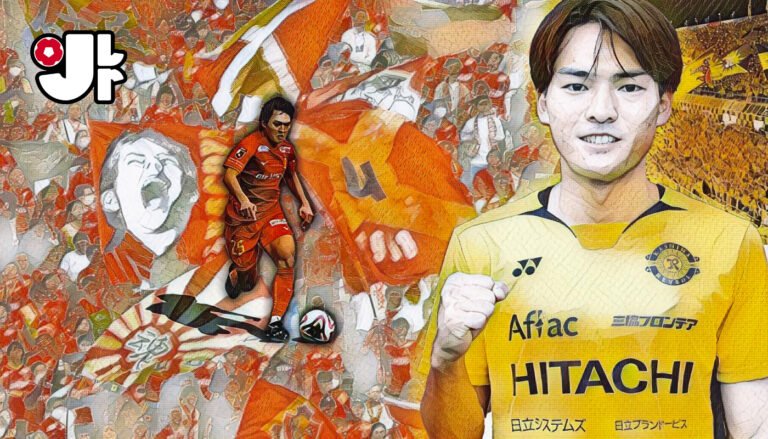
After a majestic season like that, some clubs in J1 started looking at his profile. And the fastest were Kashima Antlers, to whom Nagato moved for the 2020 season. Unfortunately, Antlers were not exactly in the brightest patch of their history. Furthermore, even if Nagano was a starter in his first season in Ibaraki, competition was hard. And even if he became the no. 1 option compared to Daiki Sugioka, when Koki Anzai came back to Antlers the year after, Nagato lost his spot.
Rollercoaster in Yokohama
In fact, already in December 2021, Nagato left Kashima to join Yokohama F. Marinos, who were onto something. Sure, Ange Postecoglou was about to leave and manage Celtic Glasgow, but the left-back tasted how satisfying could have been to be a part of that project: less defensive team, more attacking side, reliant on his left-footed wizardry. So much that Nagato actually had the fourth-highest number of minutes in J1 that season among Marinos players.
Despite the change of coach – when Postecoglou left, Kevin Muscat took over –, philosophy stayed the same at Marinos, who won the title in 2022, and matched that feat with another win in the 2023 Japanese Super Cup. Nagato didn’t make the “Best Eleven” in those first two seasons, but he was nonetheless nominated for the “J.League Outstanding Player Award” in 2022 and 2023. The numbers weren’t showing his contribution as much as in Sendai, but he was a key-player for Marinos.
Unfortunately, once Muscat left in December 2023 to coach in China, and the club started looking for the next head coach, too many changes and injuries didn’t let Nagato retain his place in the line-up. 19 league games in 2024, only 17 in 2025 – it seemed like every (Australian) head coach that Marinos had didn’t think Nagato was worth the starting spot. And that’s why, among many departures, there was also his name last Summer, moving to Vissel Kobe.
It was supposed to be the end tail of his career at 30, especially with the injuries he’s been through, and instead… it was a new chance for Nagato to show his worth: “Receiving an offer from a team that has won the J.League twice in a row was exciting for me as a player, and it made me feel like I could take another step up in my career. […] I’m 30 now, and I know the time I can play professionally is getting shorter, but I don’t feel like I’m declining, and I believe I can get even better”.
Shining in Kobe
We’ve already plauded the newly-installed market strategy by Vissel Kobe, who have revitalized so many careers in the last 4-5 years, while also winning some trophies, including two J1 titles. And for Nagato the aim was no different: “I came here to win a title with this team. I want to give my maximum to them”. And even if the first six months were kind of a settlement to a new environment under head coach Takayuki Yoshida, it worked.
But for Nagato, the change of head coach helped as well. Under Micheal Skibbe, wing-backs like Shunki Higashi and Shuto Nagano emerged as clear pieces of the puzzle when the German was coaching Sanfrecce Hiroshima. With a different line-up – no 3-4-2-1 in Kobe, but a 4-3-3 –, Skibbe gave Nagano creativity and placed him as a left-winger up front, especially after the injury of Daiju Sasaki, the goodbye of Takashi Inui, and having Diego as a left-back in the roster.
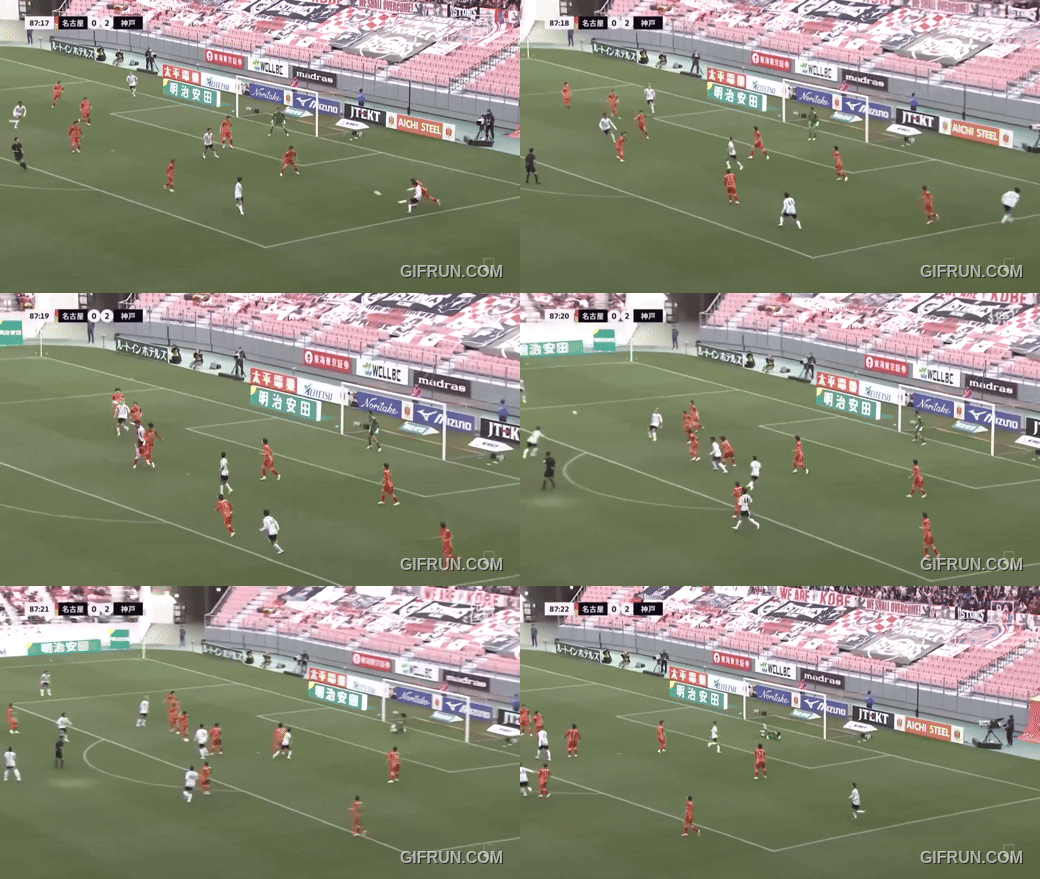
It worked marvellously – Nagato is playing some wonderful football. He featured in all games but one of the 100-Year-Vision-League, which Kobe won in spectacular fashion. Nagato also played a lot of AFC Champions League football (where Vissel reached the semifinals and lost to eventual back-to-back champions Al-Ahli), and now he started aggressively the new 2026-27 season, with two goals in six games (against Tokyo Verdy and V-Varen Nagasaki).
Maybe it’s too late to see him featuring for Japan (who knows if a spot will be given for the 2027 EAFF E-1 Championship), but Nagato definitely managed to get the best out of his career. And in an environment like Kobe – where players like Yuya Osako, Hotaru Yamaguchi, and Yoshinori Muto found their best form in their 30s –, who knows if the left-footed wizard will surprise again for a long time.